Mothers Day verses Birthday

After Mothers Day I posted on FB that it hadn’t been the best day.
It hadn’t been great because my little one hadn’t been prepped at all about a different day and not only was it different, it was about me and not him!

So I challenged myself to have a better birthday and I can say it really was a great day. But to get to that point I had to put in some work. But it really was worth it!

1. Prepping for the day
This started the day after Mother’s Day. I was determined for it to be different. And it just started with conversations. Conversations about my birthday coming up and how birthdays are important days for some people and on those days we should treat them well and treat the nicely.

My husband also took him out on a special trip to buy me some presents. My husband used the opportunity to say that Mummy probably wouldn’t want a rocket for her birthday, can we think of some things Mummy might want!

We talked about it quite a lot, and expressed regularly how he needs to behave.

Because my birthday was during the holidays, we made a holiday picture time table and my birthday was part of that.

2. Taking it personally
This is such a hard one. It goes against everything in you. If any adult or Neuro-typical child behaved in the way my little one did, you definitely would take it personally and you probably wouldn’t speak to them for a while, because you thought they were quite mean, and unthinking.

But as our ADHD nurse put it, you have to reframe it. It’s not him being mean and horrid (even though it is), but he doesn’t understand, he doesn’t know how to do this right, because socially speaking those skills are not honed yet. In some ways the whole day would have been far better if I hadn’t taken it personally. If I’d have realised all of this in the morning and not at my bedtime! If I’d taken it in my stride, then we would have had a better day. For my birthday I was half expecting it to go very wrong, so in some ways it was a complete shock and surprise when it didn’t. I altered my behaviour and tried to help him alter his.

Now I’m not saying his behaviour on Mother’s Day was acceptable. And at some points in the day there were some consequences for his behaviour. But like with all behaviour, we have to ask why? When I reframed the situation, I wasn’t as insulted and put out. Try it next time you’re in a similar situation. I hope it helps.

3. He struggles with these types of days.
We recently met with an ADHD nurse and she said something that hit me like a ton of bricks!!

“Children with ADHD don’t like CHANGE!!”

Now yes I should know this, but it’s never been said in such a clear way. Now Mother’s Day is definitely a change. It’s not part of the norm and it’s very different. This is the same for children with ASD and other neurological conditions.

So you can either give into this and say well we won’t celebrate it let’s just keep everything the same and then you as the mum miss out (again!) or you can allow it to happen and either face the consequences or prep. I personally as the mum don’t want to miss out. I work so hard at being a Mum, I want to celebrate this fact!!

4. See it as a brilliant opportunity to teach social skills.
This is not going to be the only time in his life where he will have to put someone else first. As a child his friends will have birthdays, his family will have celebrations and when he’s older and gets married and has children, that’s a whole lot of putting others first. So this has got to be taught.

We’ve always had to break social skills down into small basic chunks to support our little one. And this should have been no different.

* Putting others first
* Respect others and their feelings
* Understanding how celebrating someone else might make them feel loved and special.
* Why we have special days
* These types of days are a regular thing

Now of course you don’t teach all this in one go. But you drip feed little nuggets. The very act of prepping shows that this is important. It takes time, it might take a few years of it not being great. But have hope!!

Why should I sing?

I recently had to write an essay about this subject and it inspired me so much I had to share some of my findings with you. I am mainly writing this to any parent who wonders why they should sing because they feel a bit silly or to the people who do song time at work but they don’t really know why and again may feel a bit silly! Let me encourage you never to feel silly again because what you are doing is immensely powerful and an incredible learning tool!

So why sing…

It supports language development
There are a number of reasons for this…
Singing similar songs time and time again builds vocabulary. If you sing sleeping bunnies a million times over, the vocabulary sinks in and if mixed with the actions or signing the words embed quicker and easier. There isn’t a right or wrong outcome with music and singing. They can choose to listen or join in or experiment, therefor the children feel more confident and safe to make mistakes and learn from those mistakes. It also helps with the techniques needed for communication, such as taking turns, intonation and expression.

It helps build attachment
This one is mainly for parents and main carers. The act of singing supports building a bond, when you sing you give eye contact, you laugh together, you hug and play. The moment you start singing your child is more interested in what is happening and is more engaged and therefore that bond/attachment deepens. I use to run a choir for mums with postnatal depression – and the positive effects of singing such as, lower blood pressure, increased happiness, sense of belonging then filtered down from the mums to the children. Because they felt stronger and happier the connection with their children grew. It was a privilege to watch over time.

It helps support focus and interest
There is something called ‘Infant directed Speech’ (IDS) – speech that has more exaggerated pitch and tones. (Young, 2017) We use greater facial expressions and body movements, which excite and interest the child, meaning they pay more attention. Dionyssiou (2009)states these types of interactions ‘contributes to babies cognitive development, regulation of emotions, and supports memory, language, learning and attentiveness’. During song time IDS is being used all the time and encouraging this in-depth development. But also encouraging children to take notice, to participate and join in. I also now sing a lot of my instructions, it means they focus in on what I am singing and most of the time do as I am singing. I’ve also said before how many times I have sung ‘Let it go’ from ‘Frozen’ and how it settles children and supports pre-verbal children to join in. It’s a great song!

It is brilliant for People learning English as an additional language (EAL).
Probably for all of the reasons mentioned above singing is also incredible for people learning English. Singing – Repetition, interest, safe surroundings all support language learning. “Researchers at the University of Edinburgh in Scotland found evidence that singing can help facilitate language learning. Sixty adults participated in the study, which involved 15 minutes of listening to Hungarian phrases and then repeating the phrases normally or through song. When the participants were tested on the material, the researchers discovered those who used singing scored higher than the others.” (Article) So at work I have a lot of parents join in the singing too and I love seeing their confidence grow as they join in.

So don’t feel silly any more. I use to wonder ‘why am I doing this?’ But not any more I am developing enquiring minds young and more mature and it’s great!! Also don’t feel the pressure to use CD’s and complicated versions of the songs, your voice is enough. “Babies do not seem as able to process the multiple strands of music on a commercially produced CD” (Young, 2018). A CD would make me loose focus on the benefits of singing. I might loose the facial expressions needed or the exaggerated intonation that is so important with this type of play and creativity. So dust off your vocal chords and have fun singing!

Top tips about Speech and Language

A friend of mine, Faye is a speech and language therapist. We trained together to become Makaton Tutors and are starting to collaborate on training sessions. So I asked her to answer some of the most frequent questions I get asked about speech and Language. Keep reading for top tips and speech and language explained.

1. Can you tell me a bit about yourself? And why did you become a speech and language therapist?

Hello, my name is Faye, and I am a Specialist Speech and Language Therapist. I work with children and young adults with complex needs. I decided to become a Speech and Language Therapist after volunteering with a Speech and Language Therapist during Sixth Form. I really enjoyed the therapy sessions; I would visit every week with a young adult with Cerebral Palsy who used a device to communicate. We would go on trips to the local library and art shops as well as working on functional skills such as making a cup of tea. From this my passion grew for Speech and Language Therapy and found that Makaton was something that would be highly beneficial for the clients I support. This then lead to be becoming a Makaton Tutor and here I am today!

2. What are some easy ways to support speech at home?

First of all, it is helpful to clarify that Speech and Language Therapists work and support clients with a a range of communication skills (Not just speech!)

Communication difficulties include:
– Attention and Listening
– Understanding Difficulties
– Expressive Language (talking) difficulties
– Social communication needs
– Word finding difficulties
– Play skills
– Speech and sound difficulties
– Dysfluency (Stammering)
And lots more!

The advice would recommend varies dependent on the child’s age and of course each child is different! For young children I would highly recommend Tiny Happy People for activities and ideas.

3. When would be a time to seek help for speech and when should you just give it some time?

Again, this varies dependent on the child’s needs. As a first port of call I would recommend contacting your GP and Health visitor. They will be able to guide you regarding your local Speech and Language Therapy service and provision.

It may be beneficial to get an up-to-date hearing test for your child to ensure that their hearing is within the expected range. I’d recommend looking at the ICAN Talking Point Progress Checker for more specific advice if you have concerns https://ican.org.uk/i-cans-talking-point/progress-checker-home/

4. If English is a 2nd (3rd or 4th) language being used at home, what are the best ways to support learning English at the same time as the native language?

Continue to speak each language as you naturally would at home. Being multi-lingual is a huge benefit and has been shown to help improve academic success. It is beneficial to use visuals including the real item, photographs, pictures, drawings and signing when talking about vocabulary and talk about the word in English and other languages you use at home. This helps the child to link the object/item to the word in English and other languages.

5. Are books and singing songs great ways of supporting language?

Yes! Books are a fantastic way to support language development, children love to read and re-read (!) stories with parents/carers. As we re-read stories, they become more familiar. Stories for young children usually have lots of pictures which really helps to build their understanding of the vocabulary and story. Books help to also develop a child’s sequencing skills, the idea of a beginning, middle and an end, which is an important skill as they get older in being able to sequence their own thoughts and stories.

Nursery rhymes and songs are also highly beneficial, they are fun, which is the best way to learn! They are familiar and we all sing the same tune (or try to!) for Wheels on the Bus or Twinkle Twinkle and this will be the same when your child is at nursery/school and with you at home. Songs can also have actions, or the song can be Makaton signed which further helps to develop understanding of the word or action.

6. What are some other ways to support language even if my child doesn’t have additional needs? Is signing helpful for children without speech conditions?

Signing is helpful for all people; children, adults and everyone in between. For children, we know that adding movement when learning helps build connections in the brain to help learn and remember the word.

Using Makaton Symbols is also highly beneficial as this provides visual information to an instruction or activity. The Makaton Charity is aiming for more people to learn Makaton within schools and in the community so those that use Makaton as their communication tool are able to interact with everyone and aren’t just limited to communicating with those who know Makaton. Makaton is for everyone, all children can benefit from learning and using Makaton to develop their speech and language skills even if they do not have any additional needs.

Creating a bedroom that supports Executive Functioning.

I’ve been wanting to make my little ones bedroom work for him. Especially in the area of Executive Functioning (EF). So using the opportunity of self isolation I’ve been given the time.

Some of the different things I have already talked to you about in other posts, but here it is all in one place. I’ve used the context of the bedroom as a base for all of these different strategies, but they can be used in any room. You just need to decide what works best for you and your family.

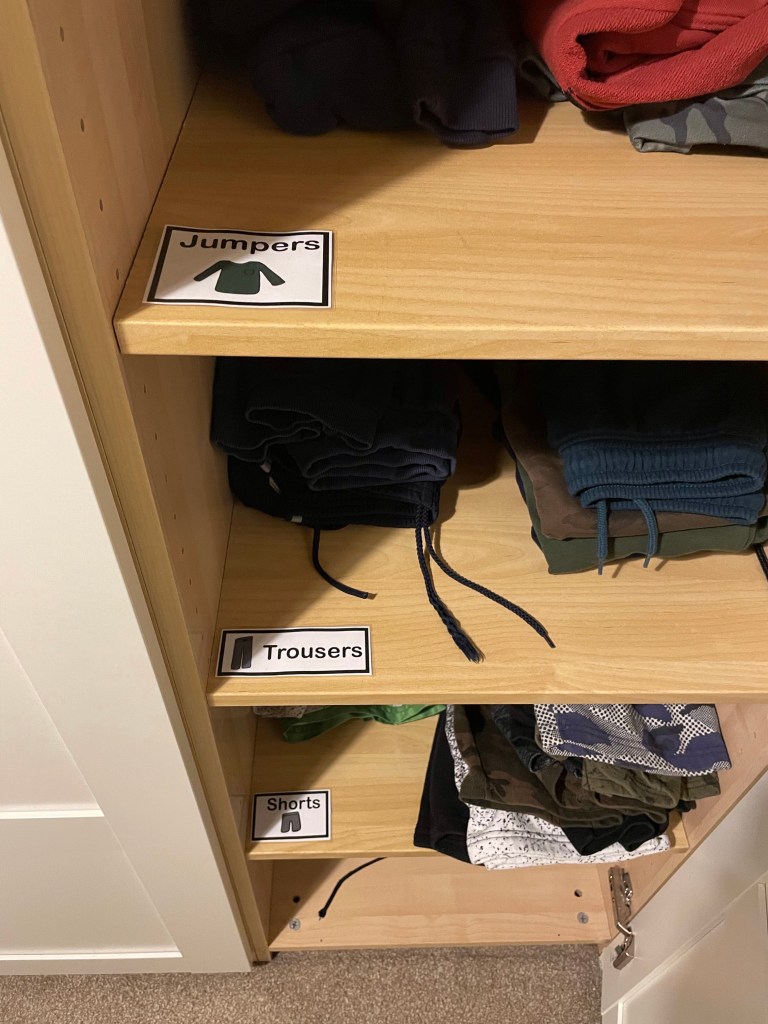
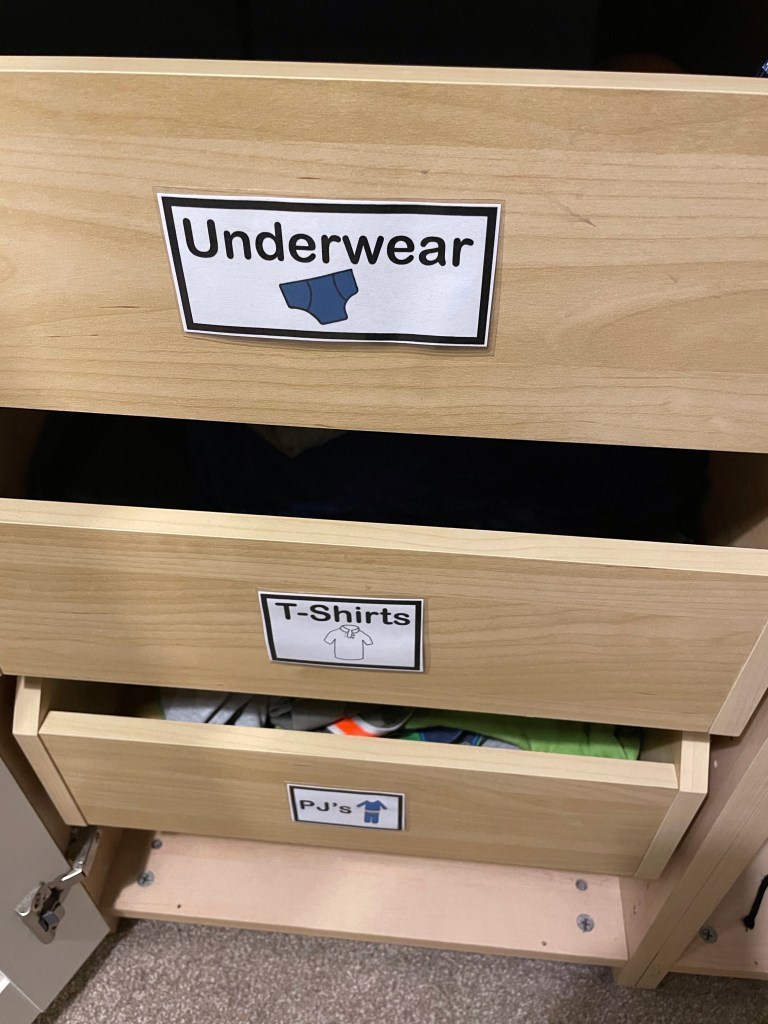
Labels for clothing

Labels for clothing – These labels are for a dual purpose. Mainly as a reminder for what he needs to wear, linked with a routine chart (coming later). But also at the moment if you ask him to tidy up, he literally can’t remember where each item goes. Jumpers end up with the trousers and so forth. I don’t mind if they are not put on the shelves properly, but it would be good if they were on the right shelf.

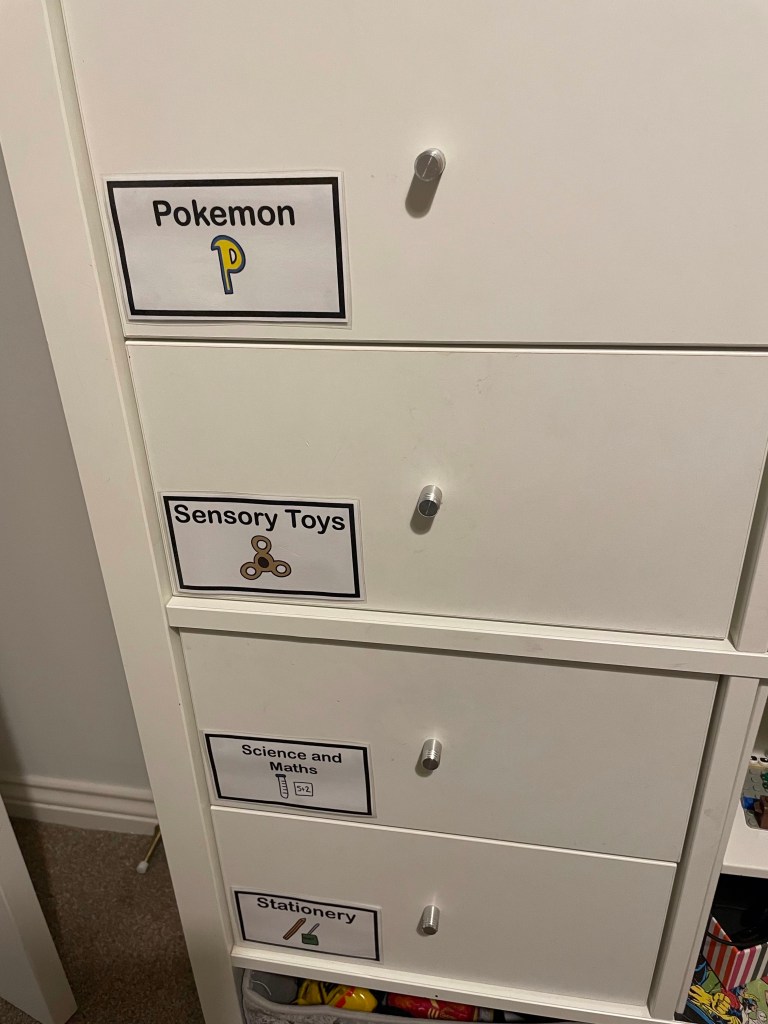
Drawer labels

Drawer Labels – At the moment he struggles to know what to play with. It’s important for all of our sanity that toys are tidied away. He would love it if toys were stored all over the floor. But that is just not possible. But the problem with keeping things tidy is that everything is hidden and therefor he doesn’t bother. He won’t think I want to play with that or that. He just doesn’t go looking. He can’t remember what he has. So drawer labels help him to know what he has, but also to know where to put things after.

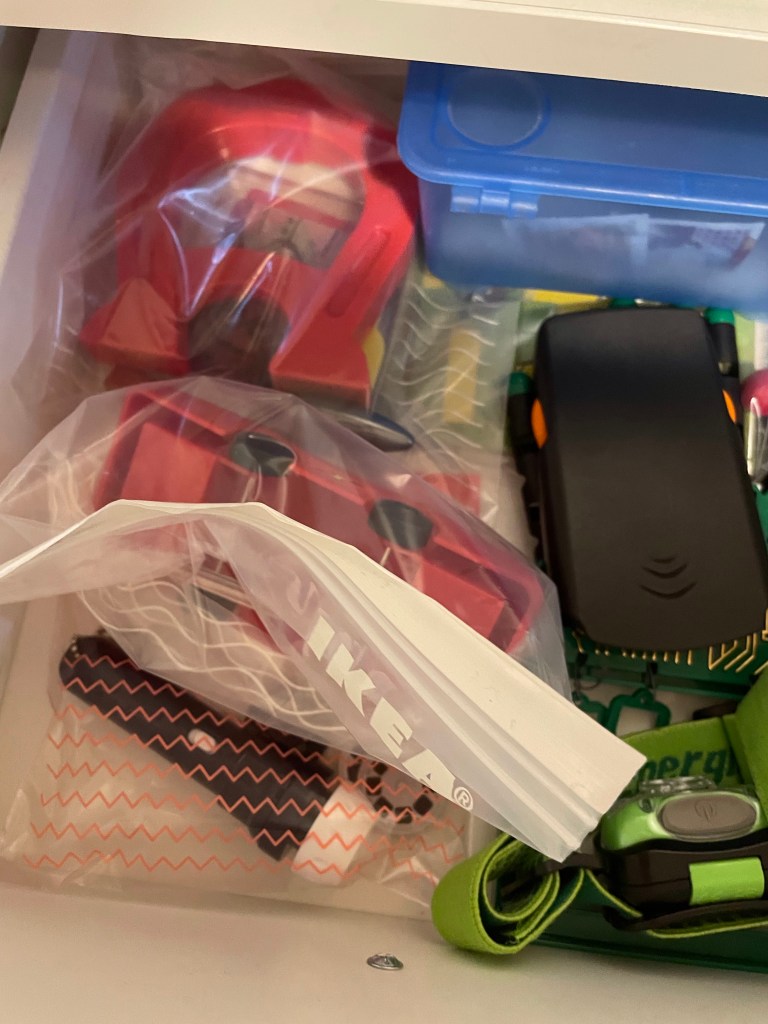
Everything is put into categories

Keep joint items together – Each item in this drawer if it has many bits are put together in a bag. Someone with ADHD won’t give something the time of day if they have to hunt for all the pieces. I’ve labelled each bag, but thats mainly for my benefit.

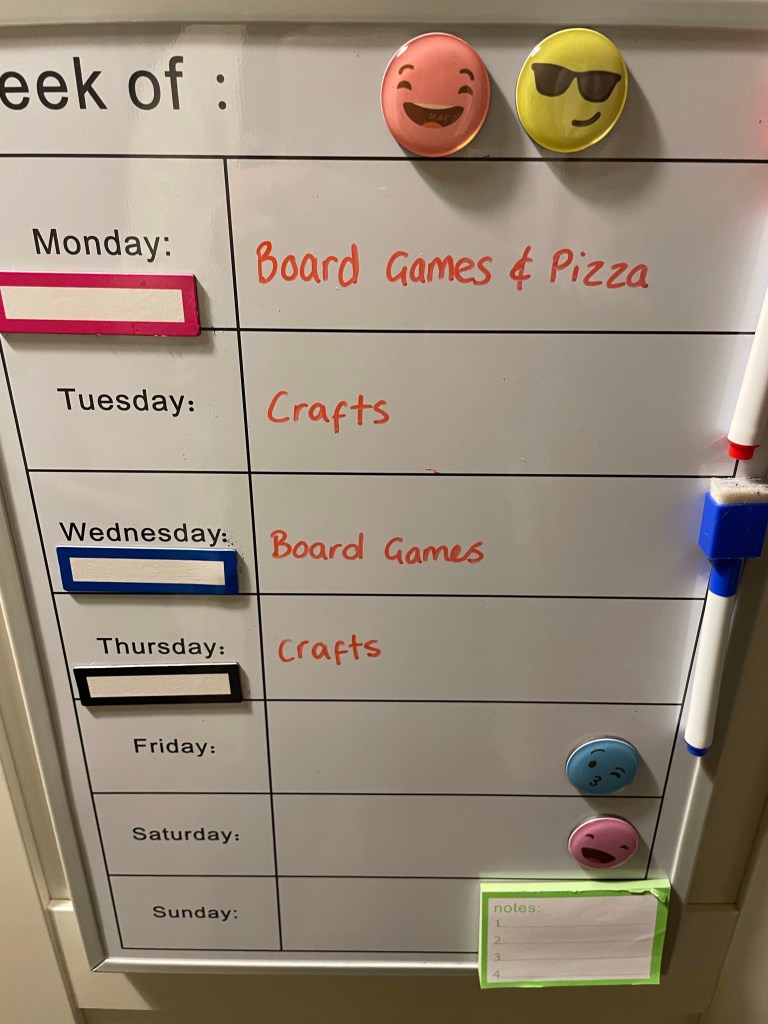
What’s happening this week

What’s happening this week board – In a previous blog I spoke about how children and Adults with ADHD see time. It’s not linear it’s just a jumbled series of events and how those events make them feel. This is updated weekly so he has quick access to what is happening during the week. He also gets time to process that certain activities that he doesn’t like as much are happening.

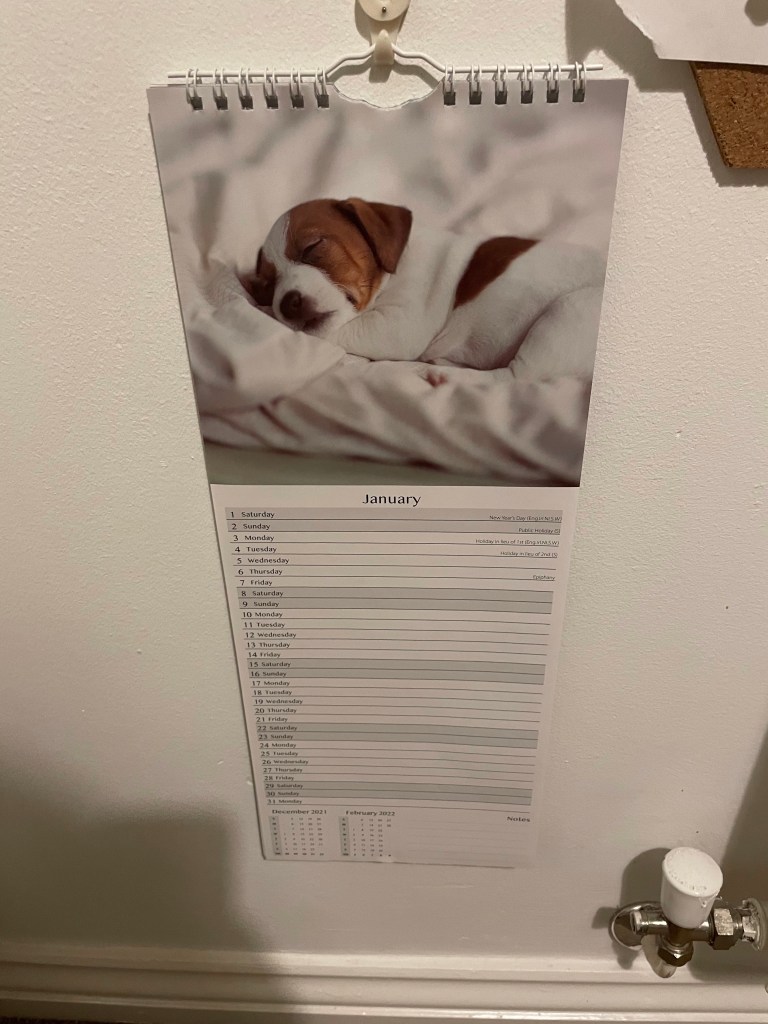
Calendar

Calendar – The calendar will again help him realise where in time we are and hopefully get him to realise the linear nature of time. I don’t want to wipe out the way he see’s time as I imagine it’s quite a wonderful way of looking at the world. But this will help him work in the way that most people do.

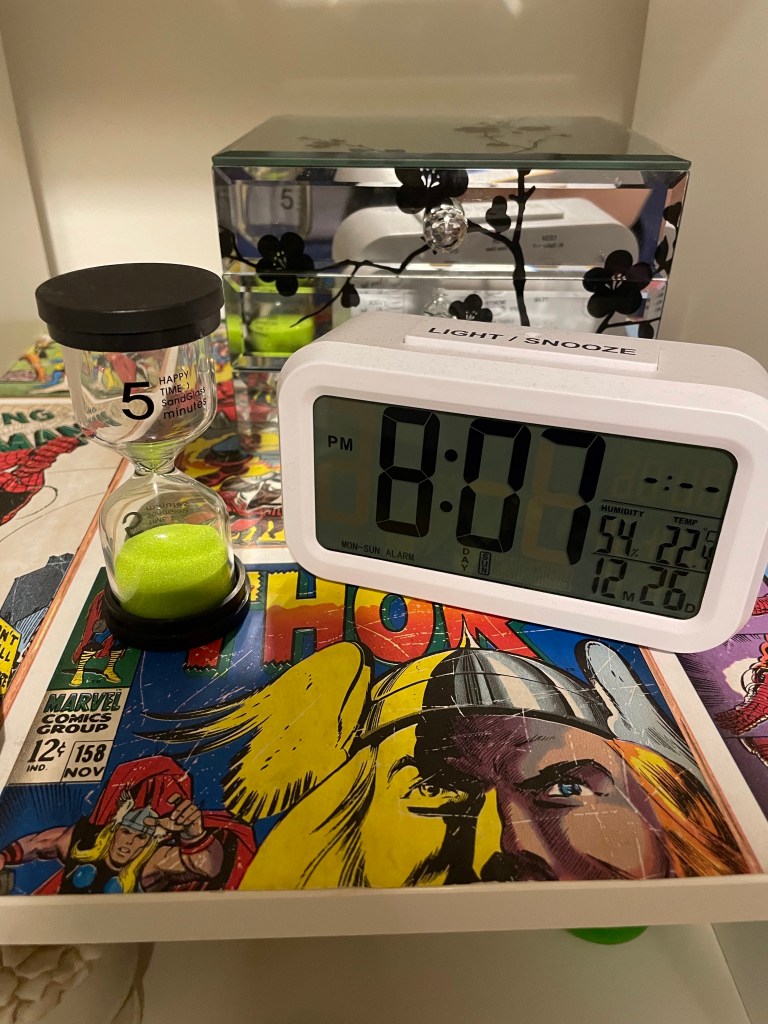
Clock and Timer

Clock and Timer – These are important things in our life. We bought a clock that tells him the time and day, but I also need him to realise what time it is. For example we start getting ready in the morning at 8am, this is so he can realise where we are in time. The timer is also a great tool, it keeps him focused. The other day I didn’t use any of the strategies (don’t ask me why!) and after about 10 times of asking him to get dressed I found him on the bed looking at something. When I asked him to get dressed again he said “O you wanted me to get dressed!” So out came the timer again!!

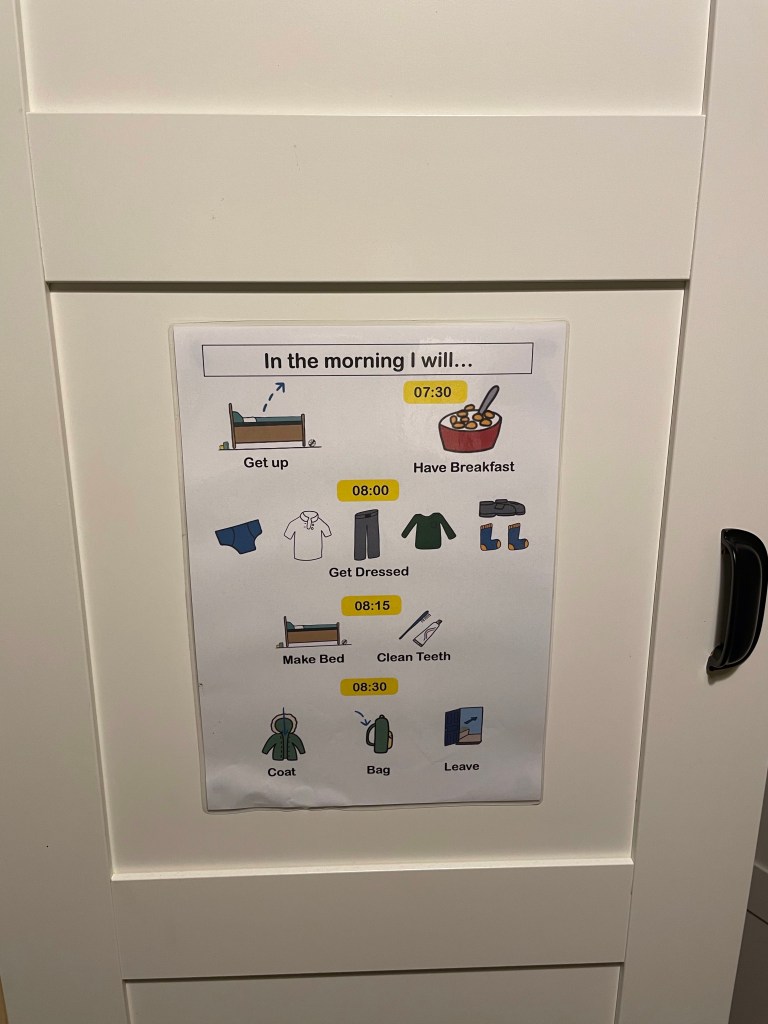
Morning Routine Chart

Morning Routine Chart – I’ve talked about this a lot, so won’t go into detail. But as you can see the labels in his wardrobe match the routine chart. So there is consistency.

I hope this helps you on your EF journey. I also hope it helps us on ours.

ADHD type characteristics

First let me explain the title. We have fought a long battle to try and get an ADHD diagnosis for our child, and it seems to go nowhere. This is for a number of reasons that we don’t need to go into. But basically I may never get a piece of paper saying my child has ADHD, but it doesn’t mean that I am not going to support him. And the way we support them is in the same way you might help a child who is diagnosed with ADHD. You may also have a child who has ADHD characteristics but doesn’t meet the threshold for diagnosis or you may just have a child that is fast, lacks focus and gets easily distracted (sound similar!)

I have pulled my hair out with my child’s behaviour over the years, and maybe this may help you to keep some of your hair. These are just a few ideas we have come up with over the years that have helped and I have also used in my work as well.

Rewards and Praise before consequences
Now I am not saying here that your child should not face the consequences of their behaviour, but before it gets to that point try rewards and praise. Children with ADHD respond so much better to praise and rewards than shouting and consequences. I find in my not so great moments that when I do shout his behaviour gets worse and it spirals. So try some of these first as a preventative measure.

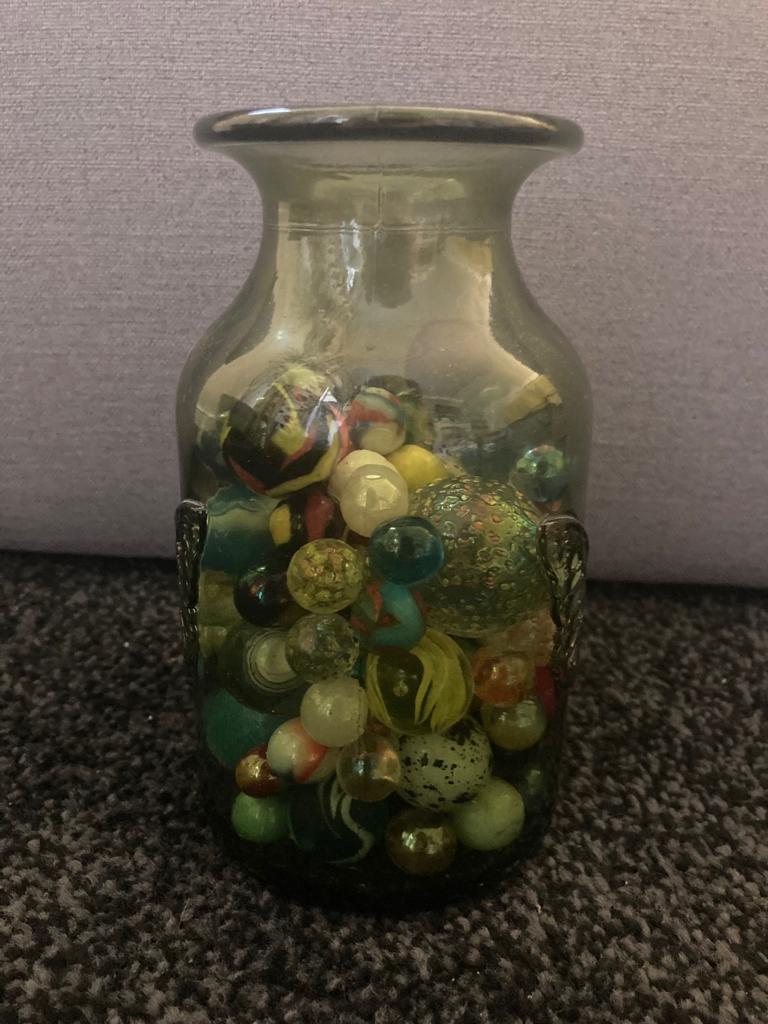
Marbles in a Jar
The key to rewards and praise is looking out for the good behaviour rather than always dealing with the not so great behaviour. Techniques like marbles in a jar helps you to focus on the good behaviour. So every time you see some great behaviour even if it is really small put a marble in the jar. Every morning empty the jar and talk about the jar together saying we want to see this jar full by the end of the day, can you do it? Seeing the jar full is in itself an intrinsic reward. If you wanted to up the joy, you could say that if the jar is full every day for 7 days we can have a small treat, which adds to the praise and rewards. This is so helpful for you as a parent/carer because it makes you look for the positive and over time your mindset will change. But it supports your child, because they are being praised regularly throughout the day rather than being told off a lot.

These next two examples are exactly the same principle just different ways of showing it.

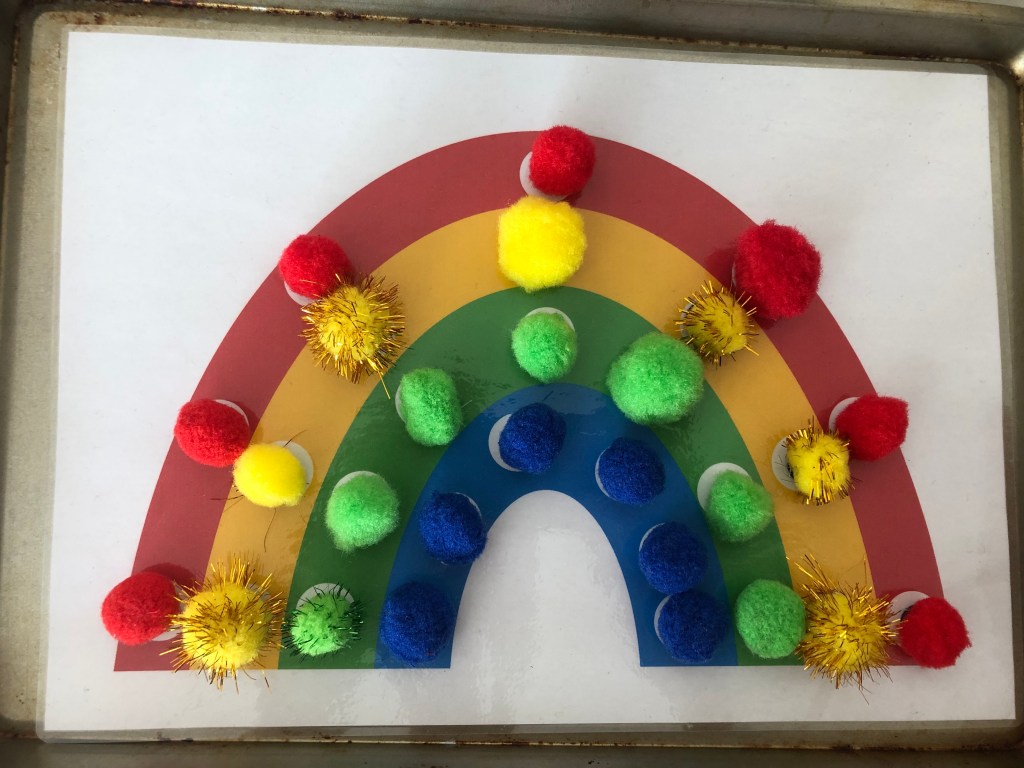
This needs some preparation, but it is colourful and fun! (Maybe best for slightly older children because of the use of magnets) Each pom pom has a magnet glued onto the bottom. The rainbow sheet which has been laminated is sitting on a metal baking sheet. Every time your child does some brilliant behaviour even if it was they said please or thank you. Put a pom pom on the rainbow. Can they fill the rainbow by the end of the day. You can download the rainbow print out below.

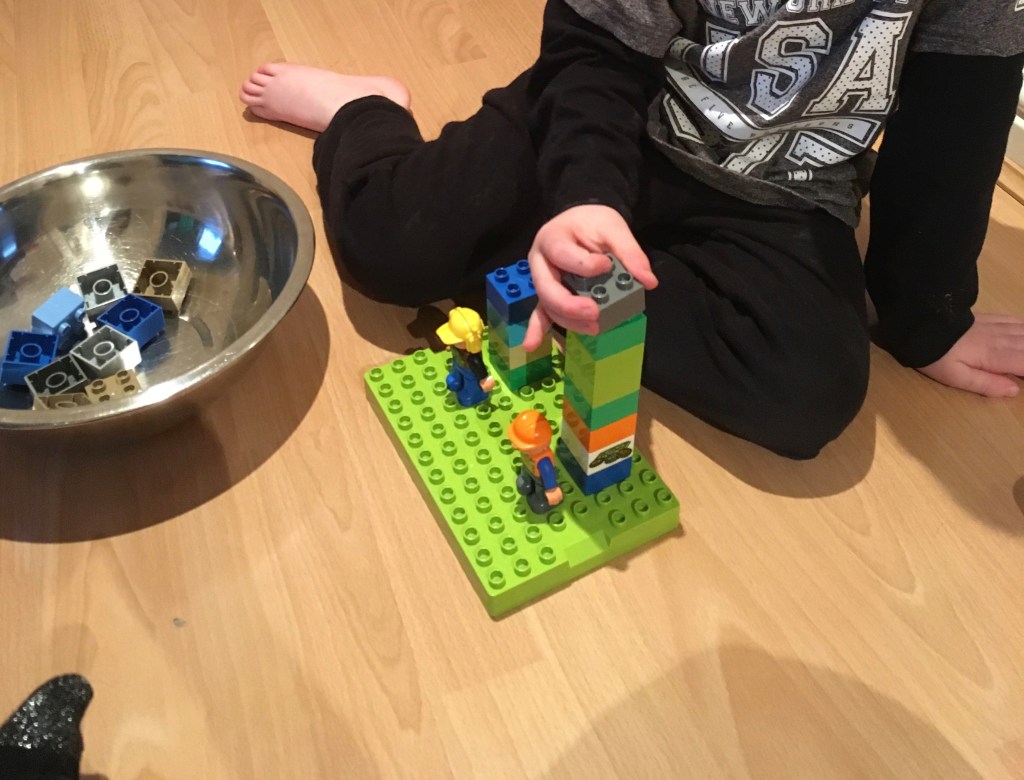
If your child is into lego or Duplo then use the Lego to make a tower. How big can the tower get? Fill a bowl with bricks every morning and see if you can use them all.

The important thing with this technique is not to take away. So if they show some not great behaviour then deal with that separately. This is all about rewards and praise.

Brain Breaks
Before entering into homework time or something that is going to require sitting still or focus. We have often gone on a run or walk first or before needing to sit still for a while we have been to the skatepark or the park first to burn off some of that excess energy. But particularly before homework time we go out for a walk. You can use this time to talk about the expectations you have for the homework time coming up, what you will do and how long it will take. But mainly this time is for letting off some steam before sitting down. It doesn’t always work, but I have noticed a difference when we have done it and when we haven’t. Or say you’ve gone to a wedding or round someone house, which isn’t completely set up for an active bean, then regularly go for a little walk outside. This will do you both the world of good and it takes the pressure off your child. We recently went to the theatre, it was an hour long show and instead of me expecting him to sit through it for the whole hour I set in my mind that at the half way point we would talk a short walk. The walk was 1 min, but that change of scenery and getting up completely settled him and he was able to enjoy the rest of the time.

Activity and Challenge
I also find that sometimes the best focus comes whilst he’s concentrating on something else at the same time. No I am not meaning watching a screen whilst testing timetables. But maybe jumping on the trampoline whilst shouting out the 3 timetables or during lockdown we took to reading a book whilst jumping.

I watched a programme once where a child played table tennis whilst revising for a history test. It may seem counterproductive to get them to do other stuff, but I think it takes the pressure off. It’s the same principle as using a fidget toy, but a whole body work out.

Where this type of thing isn’t possible, then fidget toys are brilliant. You can readily get hold of fidget toys on the high street now. Another great thing (again for older kids) is letting them have blu tac or play dough to play with whilst working or kinetic sand. Just gives them that outlet.

I guess what I am mainly trying to say is that in some ways it is better to embrace their ADHD characteristics instead of always fighting against them. There are times in life where you have to fight against them. But there are also times where you can work with them and it’s finding that balance.

Makaton

Exciting News!!!!

SEND Support is expanding and we will be offering Makaton courses before the end of the year.

Makaton has been a passion of mine for years, and then a few years ago I met a young child, who was very sad and struggling because they couldn’t communicate. After being part of their Makaton journey, I saw them come alive and the sadness disappear. It was from that moment that I knew I wanted to support others in their Makaton journey and encourage other children and adults to be able to communicate with this wonderful language programme.

Keep an eye out here for more updates and course dates. We are based in London and will be offering online courses and in person training too!