Why should I sing?

I recently had to write an essay about this subject and it inspired me so much I had to share some of my findings with you. I am mainly writing this to any parent who wonders why they should sing because they feel a bit silly or to the people who do song time at work but they don’t really know why and again may feel a bit silly! Let me encourage you never to feel silly again because what you are doing is immensely powerful and an incredible learning tool!
So why sing…

It supports language development
There are a number of reasons for this…
Singing similar songs time and time again builds vocabulary. If you sing sleeping bunnies a million times over, the vocabulary sinks in and if mixed with the actions or signing the words embed quicker and easier. There isn’t a right or wrong outcome with music and singing. They can choose to listen or join in or experiment, therefor the children feel more confident and safe to make mistakes and learn from those mistakes. It also helps with the techniques needed for communication, such as taking turns, intonation and expression.

It helps build attachment
This one is mainly for parents and main carers. The act of singing supports building a bond, when you sing you give eye contact, you laugh together, you hug and play. The moment you start singing your child is more interested in what is happening and is more engaged and therefore that bond/attachment deepens. I use to run a choir for mums with postnatal depression – and the positive effects of singing such as, lower blood pressure, increased happiness, sense of belonging then filtered down from the mums to the children. Because they felt stronger and happier the connection with their children grew. It was a privilege to watch over time.

It helps support focus and interest
There is something called ‘Infant directed Speech’ (IDS) – speech that has more exaggerated pitch and tones. (Young, 2017) We use greater facial expressions and body movements, which excite and interest the child, meaning they pay more attention. Dionyssiou (2009)states these types of interactions ‘contributes to babies cognitive development, regulation of emotions, and supports memory, language, learning and attentiveness’. During song time IDS is being used all the time and encouraging this in-depth development. But also encouraging children to take notice, to participate and join in. I also now sing a lot of my instructions, it means they focus in on what I am singing and most of the time do as I am singing. I’ve also said before how many times I have sung ‘Let it go’ from ‘Frozen’ and how it settles children and supports pre-verbal children to join in. It’s a great song!

It is brilliant for People learning English as an additional language (EAL).
Probably for all of the reasons mentioned above singing is also incredible for people learning English. Singing – Repetition, interest, safe surroundings all support language learning. “Researchers at the University of Edinburgh in Scotland found evidence that singing can help facilitate language learning. Sixty adults participated in the study, which involved 15 minutes of listening to Hungarian phrases and then repeating the phrases normally or through song. When the participants were tested on the material, the researchers discovered those who used singing scored higher than the others.” (Article) So at work I have a lot of parents join in the singing too and I love seeing their confidence grow as they join in.
So don’t feel silly any more. I use to wonder ‘why am I doing this?’ But not any more I am developing enquiring minds young and more mature and it’s great!! Also don’t feel the pressure to use CD’s and complicated versions of the songs, your voice is enough. “Babies do not seem as able to process the multiple strands of music on a commercially produced CD” (Young, 2018). A CD would make me loose focus on the benefits of singing. I might loose the facial expressions needed or the exaggerated intonation that is so important with this type of play and creativity. So dust off your vocal chords and have fun singing!
Top tips about Speech and Language

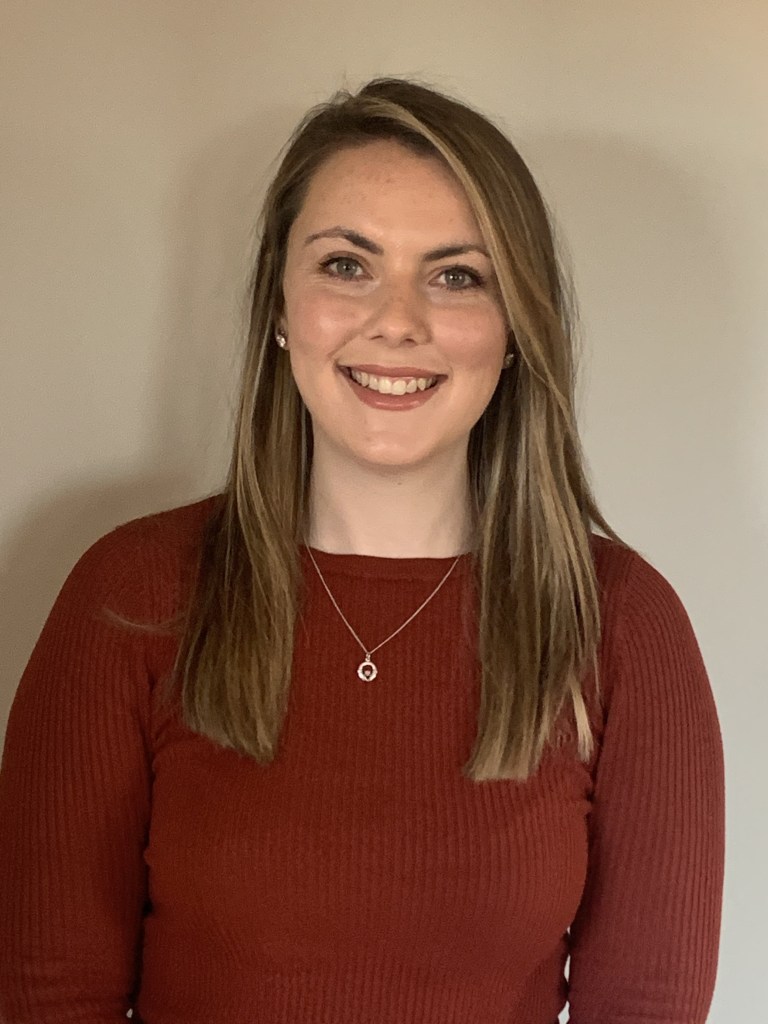
A friend of mine, Faye is a speech and language therapist. We trained together to become Makaton Tutors and are starting to collaborate on training sessions. So I asked her to answer some of the most frequent questions I get asked about speech and Language. Keep reading for top tips and speech and language explained.

1. Can you tell me a bit about yourself? And why did you become a speech and language therapist?

Hello, my name is Faye, and I am a Specialist Speech and Language Therapist. I work with children and young adults with complex needs. I decided to become a Speech and Language Therapist after volunteering with a Speech and Language Therapist during Sixth Form. I really enjoyed the therapy sessions; I would visit every week with a young adult with Cerebral Palsy who used a device to communicate. We would go on trips to the local library and art shops as well as working on functional skills such as making a cup of tea. From this my passion grew for Speech and Language Therapy and found that Makaton was something that would be highly beneficial for the clients I support. This then lead to be becoming a Makaton Tutor and here I am today!

2. What are some easy ways to support speech at home?

First of all, it is helpful to clarify that Speech and Language Therapists work and support clients with a a range of communication skills (Not just speech!)

Communication difficulties include:
– Attention and Listening
– Understanding Difficulties
– Expressive Language (talking) difficulties
– Social communication needs
– Word finding difficulties
– Play skills
– Speech and sound difficulties
– Dysfluency (Stammering)
And lots more!

The advice would recommend varies dependent on the child’s age and of course each child is different! For young children I would highly recommend Tiny Happy People for activities and ideas.

3. When would be a time to seek help for speech and when should you just give it some time?

Again, this varies dependent on the child’s needs. As a first port of call I would recommend contacting your GP and Health visitor. They will be able to guide you regarding your local Speech and Language Therapy service and provision.

It may be beneficial to get an up-to-date hearing test for your child to ensure that their hearing is within the expected range. I’d recommend looking at the ICAN Talking Point Progress Checker for more specific advice if you have concerns https://ican.org.uk/i-cans-talking-point/progress-checker-home/

4. If English is a 2nd (3rd or 4th) language being used at home, what are the best ways to support learning English at the same time as the native language?

Continue to speak each language as you naturally would at home. Being multi-lingual is a huge benefit and has been shown to help improve academic success. It is beneficial to use visuals including the real item, photographs, pictures, drawings and signing when talking about vocabulary and talk about the word in English and other languages you use at home. This helps the child to link the object/item to the word in English and other languages.

5. Are books and singing songs great ways of supporting language?

Yes! Books are a fantastic way to support language development, children love to read and re-read (!) stories with parents/carers. As we re-read stories, they become more familiar. Stories for young children usually have lots of pictures which really helps to build their understanding of the vocabulary and story. Books help to also develop a child’s sequencing skills, the idea of a beginning, middle and an end, which is an important skill as they get older in being able to sequence their own thoughts and stories.

Nursery rhymes and songs are also highly beneficial, they are fun, which is the best way to learn! They are familiar and we all sing the same tune (or try to!) for Wheels on the Bus or Twinkle Twinkle and this will be the same when your child is at nursery/school and with you at home. Songs can also have actions, or the song can be Makaton signed which further helps to develop understanding of the word or action.

6. What are some other ways to support language even if my child doesn’t have additional needs? Is signing helpful for children without speech conditions?

Signing is helpful for all people; children, adults and everyone in between. For children, we know that adding movement when learning helps build connections in the brain to help learn and remember the word.

Using Makaton Symbols is also highly beneficial as this provides visual information to an instruction or activity. The Makaton Charity is aiming for more people to learn Makaton within schools and in the community so those that use Makaton as their communication tool are able to interact with everyone and aren’t just limited to communicating with those who know Makaton. Makaton is for everyone, all children can benefit from learning and using Makaton to develop their speech and language skills even if they do not have any additional needs.

Christmas Makaton Taster Session

It’s the most wonderful time of the year!

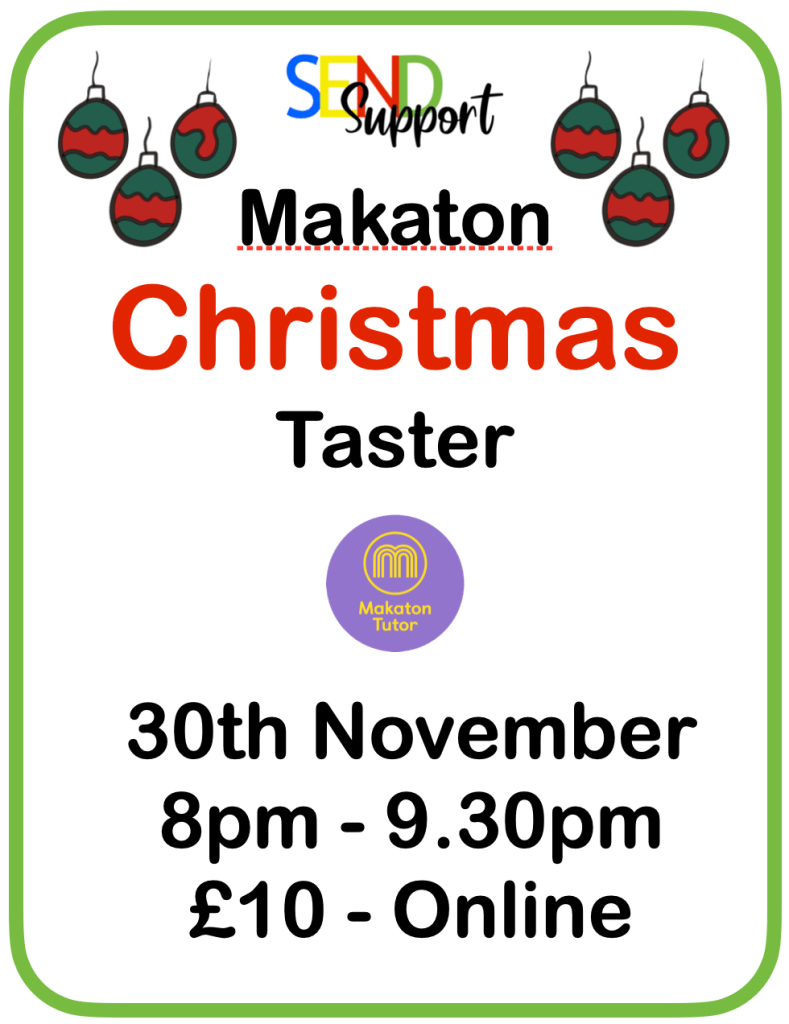
We are offering a Christmas Taster session just in time for the Christmas season. You will learn a number of Christmas signs and get a taste of the benefits of Makaton and meet others as they start their Makaton Journey. Or you can also come along if you have completed your levels, but just want to learn some Christmassy signs.

For more information and how to book CLICK HERE.

You will get a resources sheet of the signs we cover on the evening and a certificate of attendance!

Hope to see you there!

Makaton

Exciting News!!!!

SEND Support is expanding and we will be offering Makaton courses before the end of the year.

Makaton has been a passion of mine for years, and then a few years ago I met a young child, who was very sad and struggling because they couldn’t communicate. After being part of their Makaton journey, I saw them come alive and the sadness disappear. It was from that moment that I knew I wanted to support others in their Makaton journey and encourage other children and adults to be able to communicate with this wonderful language programme.

Keep an eye out here for more updates and course dates. We are based in London and will be offering online courses and in person training too!