ADHD and Covid

I know I am a bit late to the party, but I didn’t confidently feel I could write about this until really having to deal with it.

Covid has rocked all of our worlds in one way or another. For some it’s been the push they need to make big decisions and for some its completely put a stop to things.

For us covid has had a number of impacts some not great and some great! When it all first happened, we realised that our support networks for our active bean (my son) were things like swimming, gymnastics, the indoor skate park, the trampoline park. These were the things we used to survive on a daily basis. And these were all taken away as soon as Covid arrived. This was a disaster for us. Plus we lived in a second floor flat, so getting outside and getting exercise or at least the amount of exercise needed was tricky. So for a while it was bad! What was good is we were able to ask for help from the school and it finally gave us the push we needed to move to a house with a garden and a trampoline. Which has made a significant difference.
We’ve been able to get back some normality as the time has gone on, we’ve gone back to the trampoline parks and the skate parks and weekly gymnastics.

But then my active bean got covid recently and had to self isolate for 10 days. All my fears were realised, I have dreaded being in for that amount of time. We’ve never done it. But although it wasn’t as bad as I thought, it did get me thinking. Especially as when track and trace call and ask if you need any support and the women got a diatribe about how we need to do more about support adults and children with ADHD whilst self isolating (I’m not sure she knew what to make of it).

I then read a research article about covid and ADHD (I’m so sorry but I can’t find it again) but the conclusion was this…
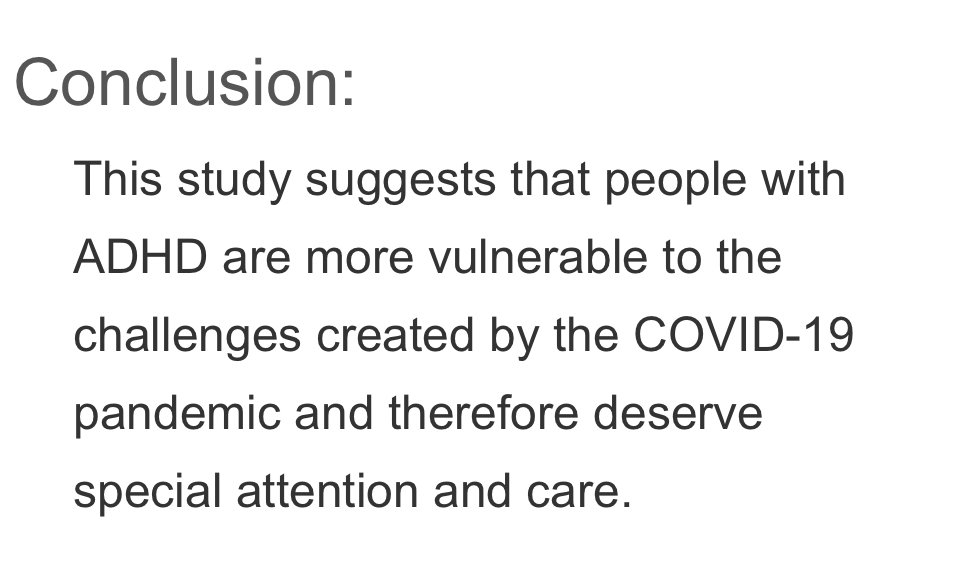
So what are some of the challenges? and what can be done?

1. No exercise – during lockdown at least we could get out for at least an hour a day (no way near enough, but it was something). But when self isolating there was no way we could leave the house. Annoyingly it also rained a lot so the garden was off limits too.
Answer One day we did a lot of running on the spot, another day we joined in a session of Apple fitness. Another day he just slid down the stairs a lot!

Another research article I read supports the absolute need for physical activity. They scanned peoples brains who have ADHD and after physical activity they were able to have the greatest amount of executive control.
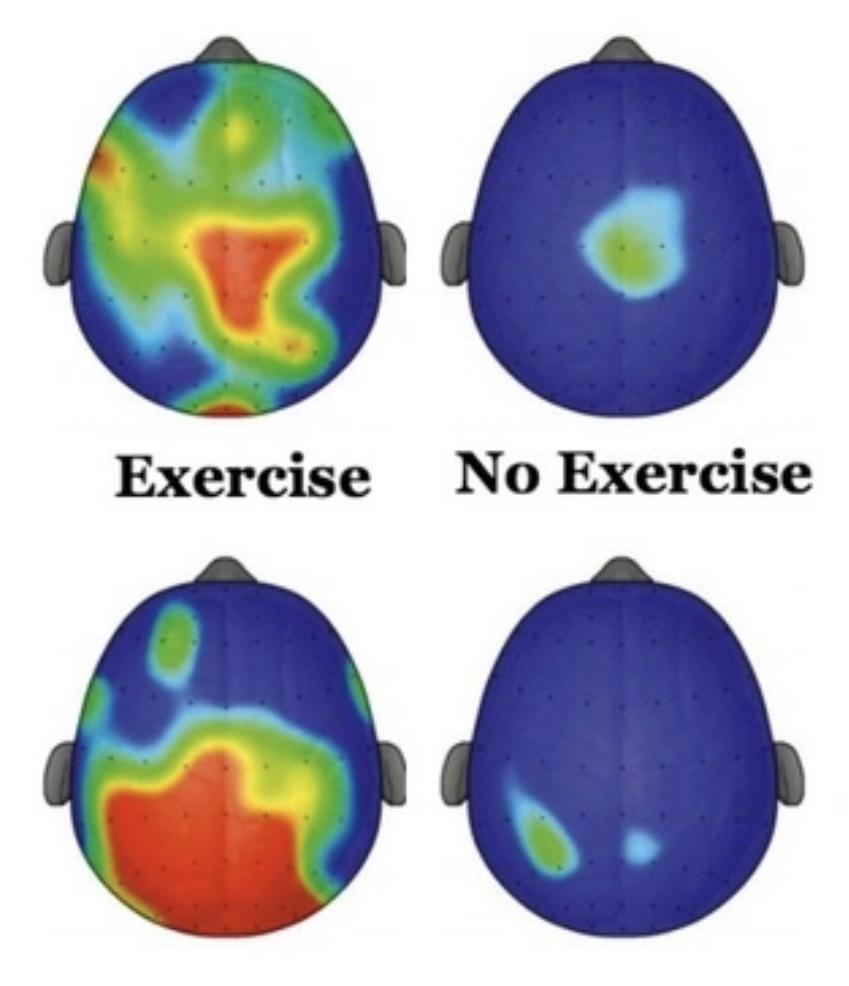
The red represents the greatest amount of executive control and blue represents the lowest.

We find this so much in our every day life, after school we have to go out on some massive run or climb or something to allow him to unwind and then the evening is better. So if in self isolation make time for physical activity. Carve out the time, if you have a child with ADHD find a fun way to make room for at least 10 mins of physical activity, life will feel a bit better.

2. No structure – There was no structure for us, it was the Christmas holiday, so we didn’t have to do home learning. We also obviously couldn’t see family or do all the things we’d planned so that was difficult. It was our decision that we wouldn’t have restrictions on screen time, but we did try to plan in at least one activity a day. I must confess that this was tricky, but we did manage it. We used the joy of amazon to buy in new activities such as Polymer clay or games, and we enjoyed a lot of cake and watched films together.

3. Cabin Fever – This did get to us, especially my little one. By 5pm most days he would be having a melt down. So we began to plan things in for around this time. Fire pits (If it wasn’t raining) or a nice dinner. But mostly we were just with him in the melt down.

The reality is self isolating with someone with ADHD is tricky, self isolating with someone without ADHD is tricky.

Some things I wish I had done.
1. Forced garden time each day – this may have helped getting some fresh air.

2. Not done the day 6 & 7 test – he was so upset and disappointed when we tested on day 6 & 7 and found he was still positive. So in a way I wish I would have just stuck it out.

3. Transitioned for day 10 – He was really anxious about leaving the house when he actually could. I wish I had done a picture timetable to help that transition.

4. Support sensory needs – In some way I think I should have created a calm down sensory space.

But hopefully my wish list might give you ideas if you ate in the same situation.
Creating a bedroom that supports Executive Functioning.

I’ve been wanting to make my little ones bedroom work for him. Especially in the area of Executive Functioning (EF). So using the opportunity of self isolation I’ve been given the time.

Some of the different things I have already talked to you about in other posts, but here it is all in one place. I’ve used the context of the bedroom as a base for all of these different strategies, but they can be used in any room. You just need to decide what works best for you and your family.

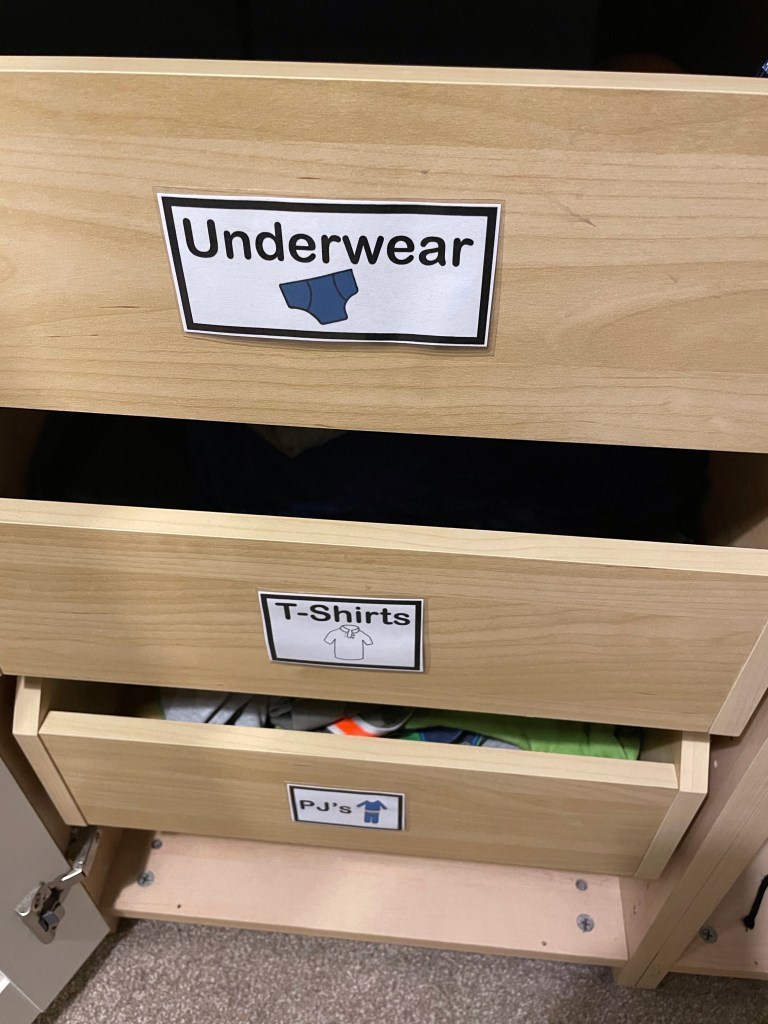
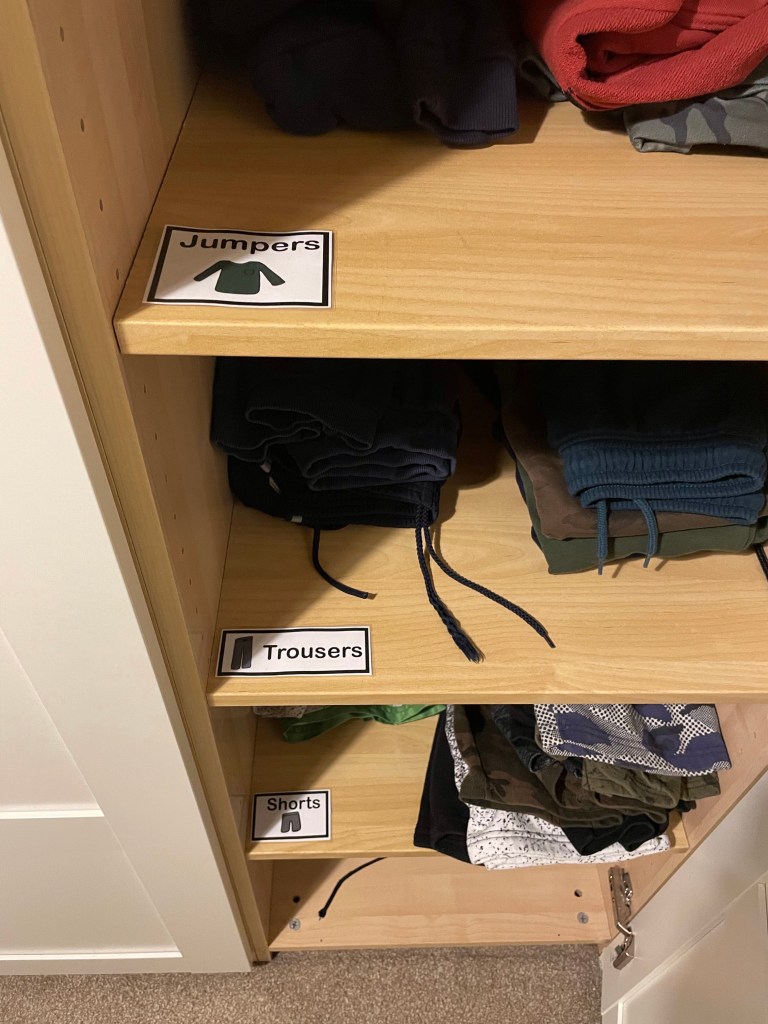
Labels for clothing

Labels for clothing – These labels are for a dual purpose. Mainly as a reminder for what he needs to wear, linked with a routine chart (coming later). But also at the moment if you ask him to tidy up, he literally can’t remember where each item goes. Jumpers end up with the trousers and so forth. I don’t mind if they are not put on the shelves properly, but it would be good if they were on the right shelf.

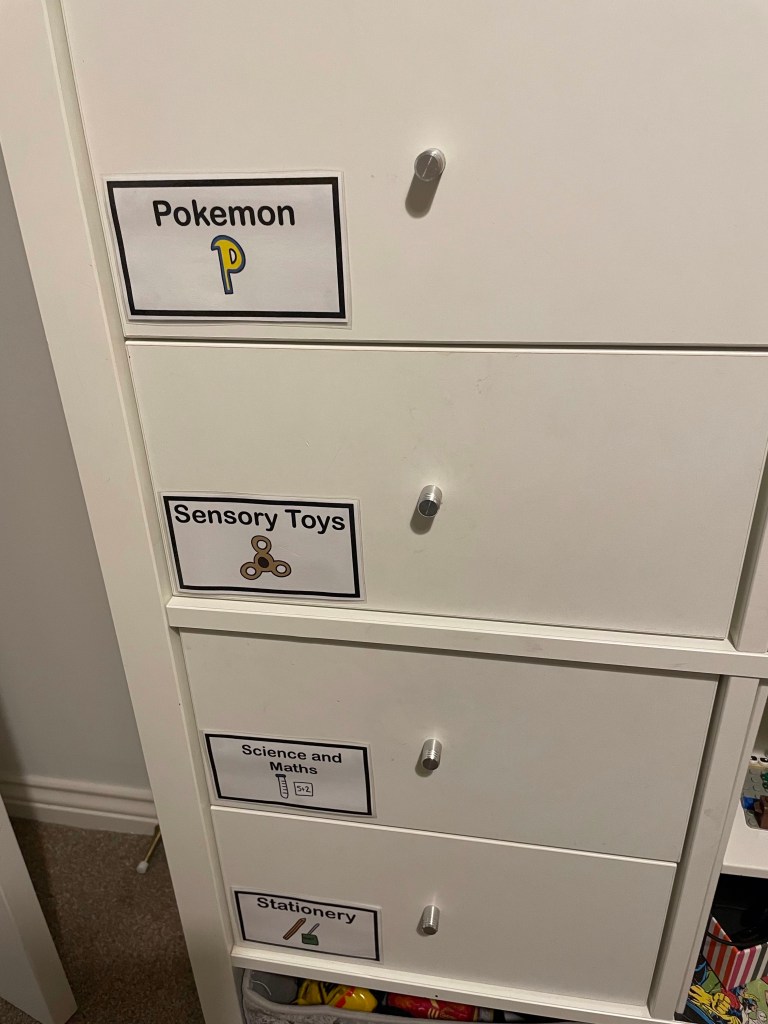
Drawer labels

Drawer Labels – At the moment he struggles to know what to play with. It’s important for all of our sanity that toys are tidied away. He would love it if toys were stored all over the floor. But that is just not possible. But the problem with keeping things tidy is that everything is hidden and therefor he doesn’t bother. He won’t think I want to play with that or that. He just doesn’t go looking. He can’t remember what he has. So drawer labels help him to know what he has, but also to know where to put things after.

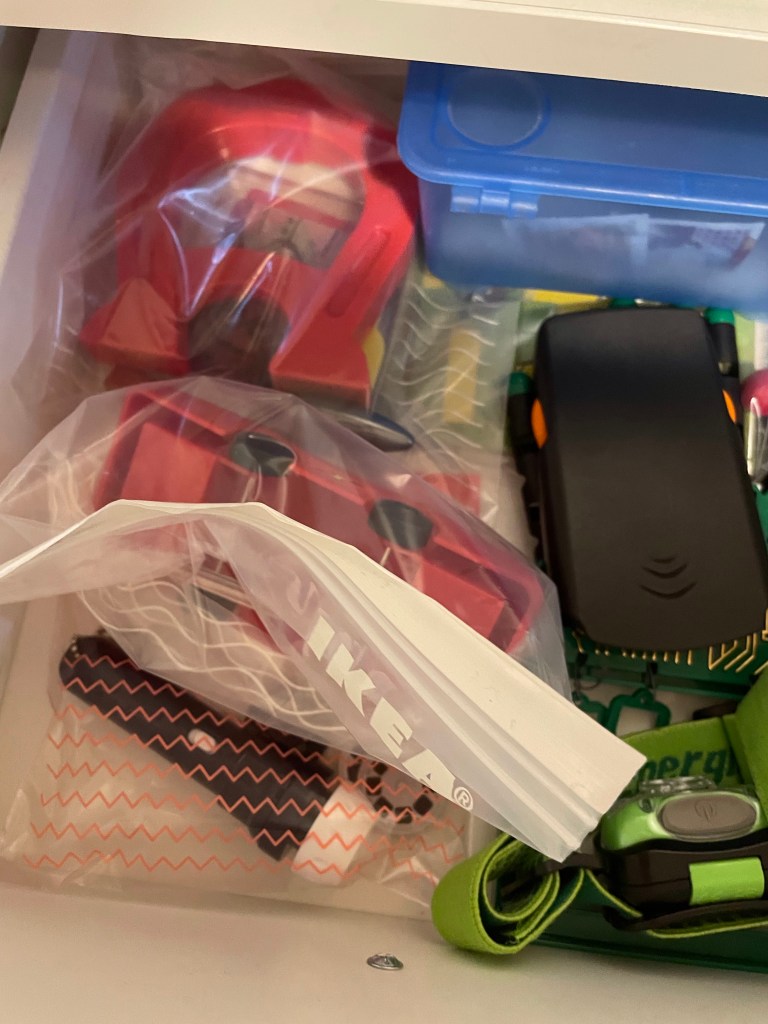
Everything is put into categories

Keep joint items together – Each item in this drawer if it has many bits are put together in a bag. Someone with ADHD won’t give something the time of day if they have to hunt for all the pieces. I’ve labelled each bag, but thats mainly for my benefit.

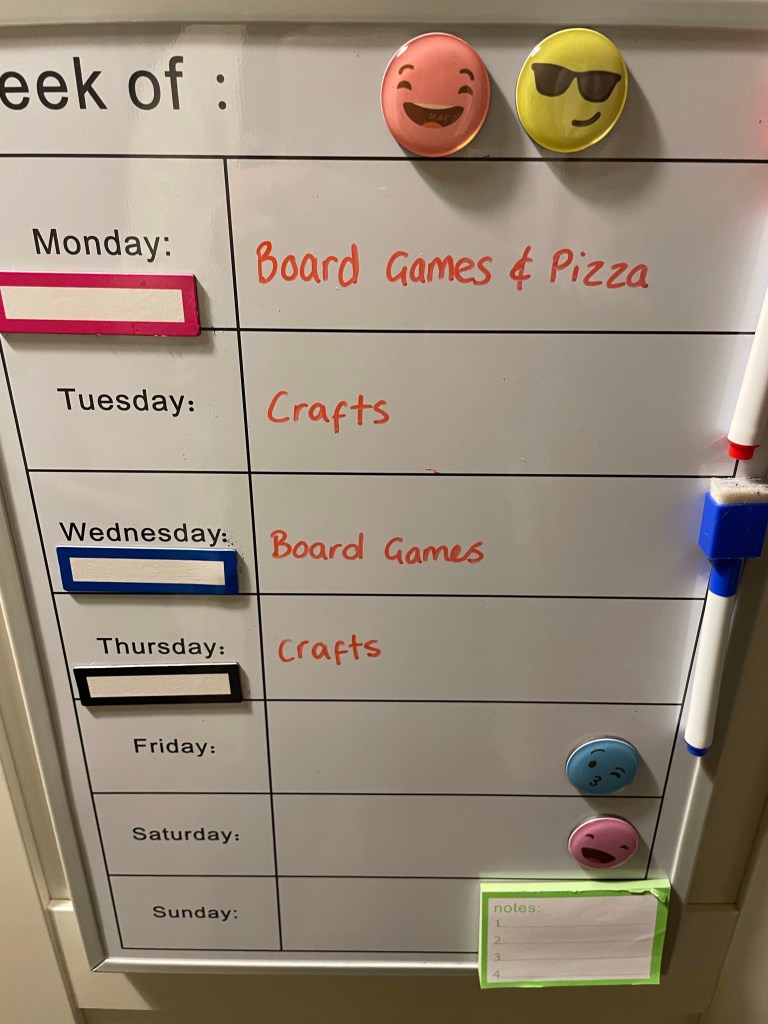
What’s happening this week

What’s happening this week board – In a previous blog I spoke about how children and Adults with ADHD see time. It’s not linear it’s just a jumbled series of events and how those events make them feel. This is updated weekly so he has quick access to what is happening during the week. He also gets time to process that certain activities that he doesn’t like as much are happening.

Calendar

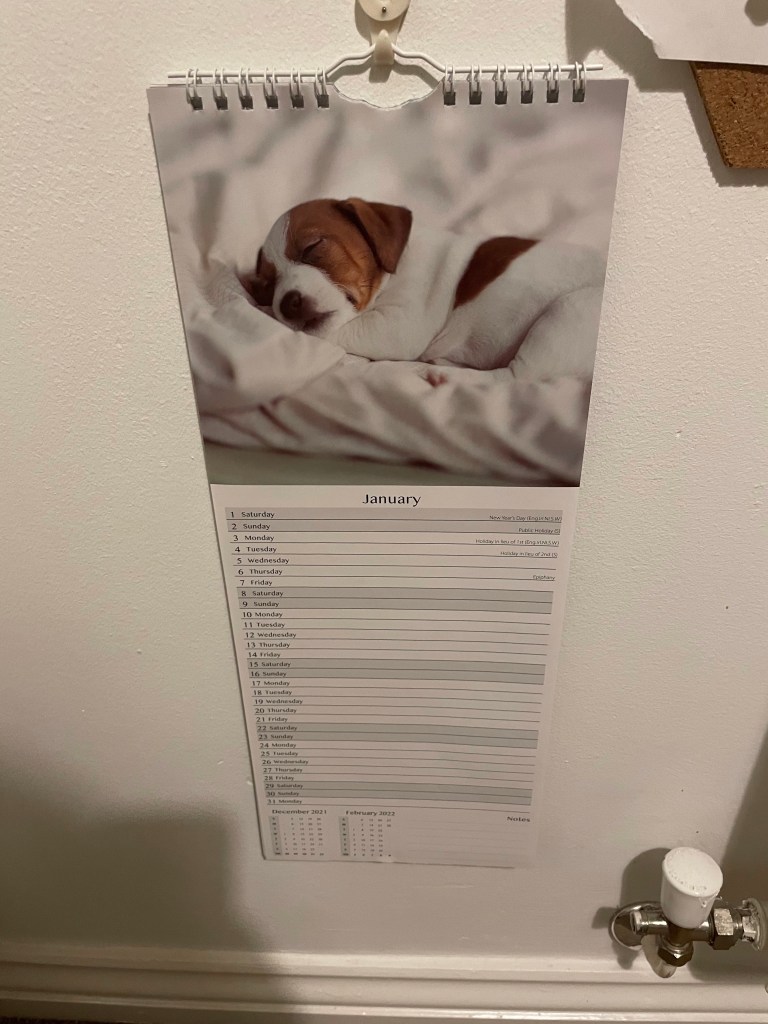
Calendar – The calendar will again help him realise where in time we are and hopefully get him to realise the linear nature of time. I don’t want to wipe out the way he see’s time as I imagine it’s quite a wonderful way of looking at the world. But this will help him work in the way that most people do.

Clock and Timer

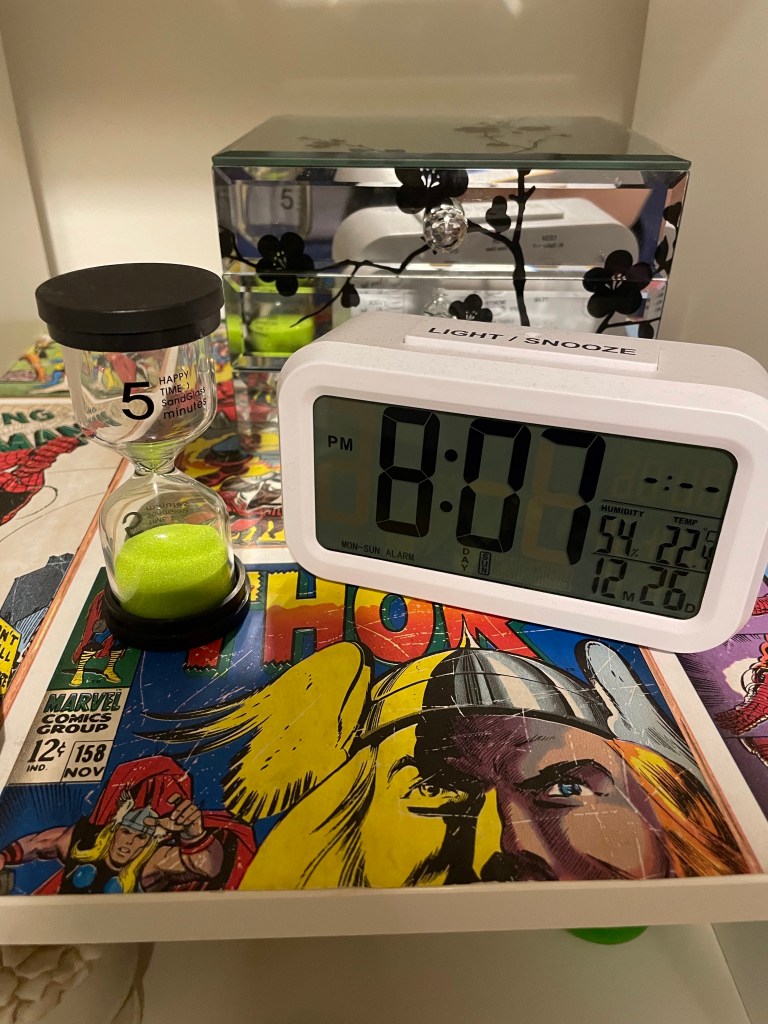
Clock and Timer – These are important things in our life. We bought a clock that tells him the time and day, but I also need him to realise what time it is. For example we start getting ready in the morning at 8am, this is so he can realise where we are in time. The timer is also a great tool, it keeps him focused. The other day I didn’t use any of the strategies (don’t ask me why!) and after about 10 times of asking him to get dressed I found him on the bed looking at something. When I asked him to get dressed again he said “O you wanted me to get dressed!” So out came the timer again!!

Morning Routine Chart

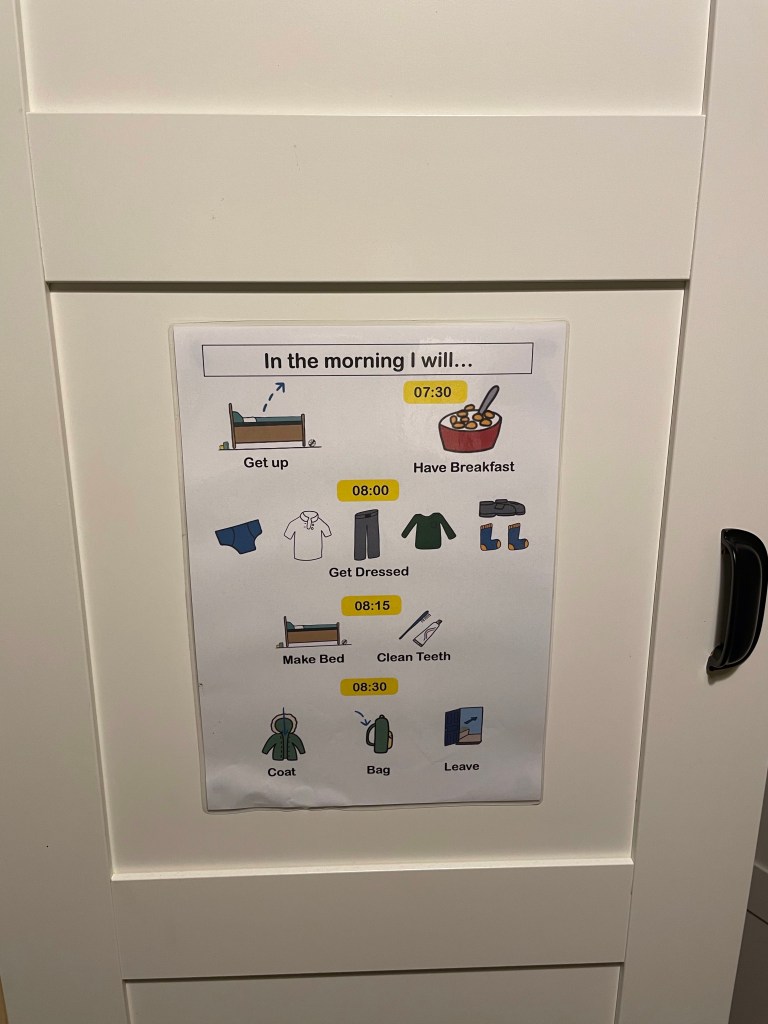
Morning Routine Chart – I’ve talked about this a lot, so won’t go into detail. But as you can see the labels in his wardrobe match the routine chart. So there is consistency.

I hope this helps you on your EF journey. I also hope it helps us on ours.

ADHD type characteristics

First let me explain the title. We have fought a long battle to try and get an ADHD diagnosis for our child, and it seems to go nowhere. This is for a number of reasons that we don’t need to go into. But basically I may never get a piece of paper saying my child has ADHD, but it doesn’t mean that I am not going to support him. And the way we support them is in the same way you might help a child who is diagnosed with ADHD. You may also have a child who has ADHD characteristics but doesn’t meet the threshold for diagnosis or you may just have a child that is fast, lacks focus and gets easily distracted (sound similar!)

I have pulled my hair out with my child’s behaviour over the years, and maybe this may help you to keep some of your hair. These are just a few ideas we have come up with over the years that have helped and I have also used in my work as well.

Rewards and Praise before consequences
Now I am not saying here that your child should not face the consequences of their behaviour, but before it gets to that point try rewards and praise. Children with ADHD respond so much better to praise and rewards than shouting and consequences. I find in my not so great moments that when I do shout his behaviour gets worse and it spirals. So try some of these first as a preventative measure.

Marbles in a Jar
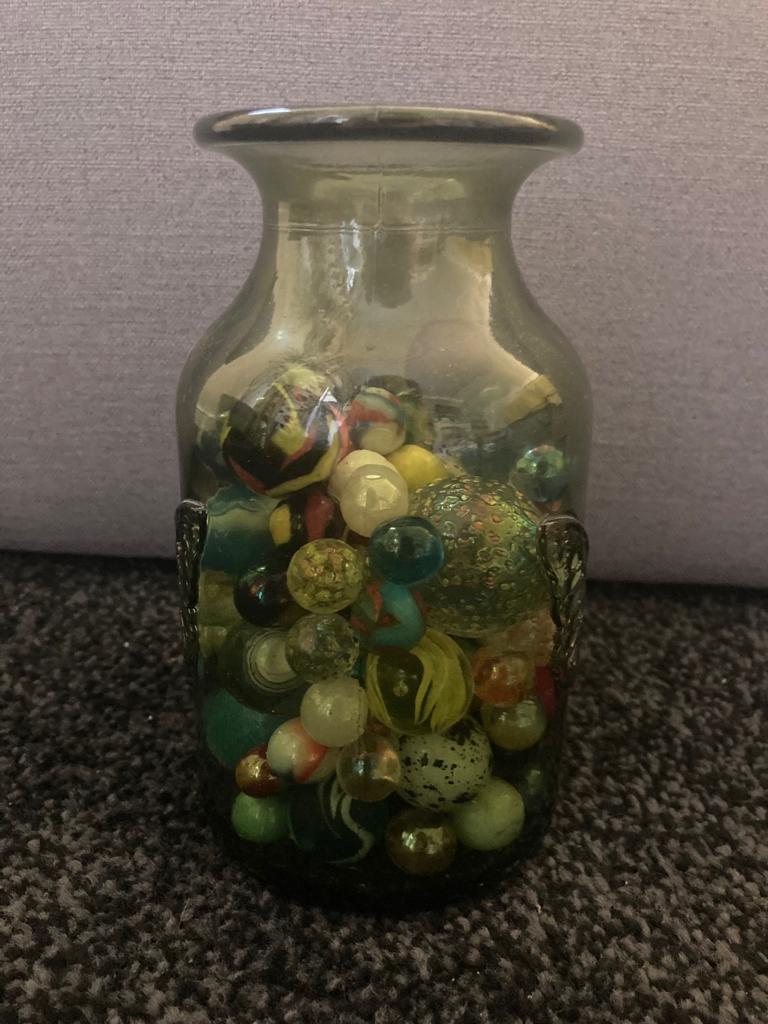
The key to rewards and praise is looking out for the good behaviour rather than always dealing with the not so great behaviour. Techniques like marbles in a jar helps you to focus on the good behaviour. So every time you see some great behaviour even if it is really small put a marble in the jar. Every morning empty the jar and talk about the jar together saying we want to see this jar full by the end of the day, can you do it? Seeing the jar full is in itself an intrinsic reward. If you wanted to up the joy, you could say that if the jar is full every day for 7 days we can have a small treat, which adds to the praise and rewards. This is so helpful for you as a parent/carer because it makes you look for the positive and over time your mindset will change. But it supports your child, because they are being praised regularly throughout the day rather than being told off a lot.

These next two examples are exactly the same principle just different ways of showing it.

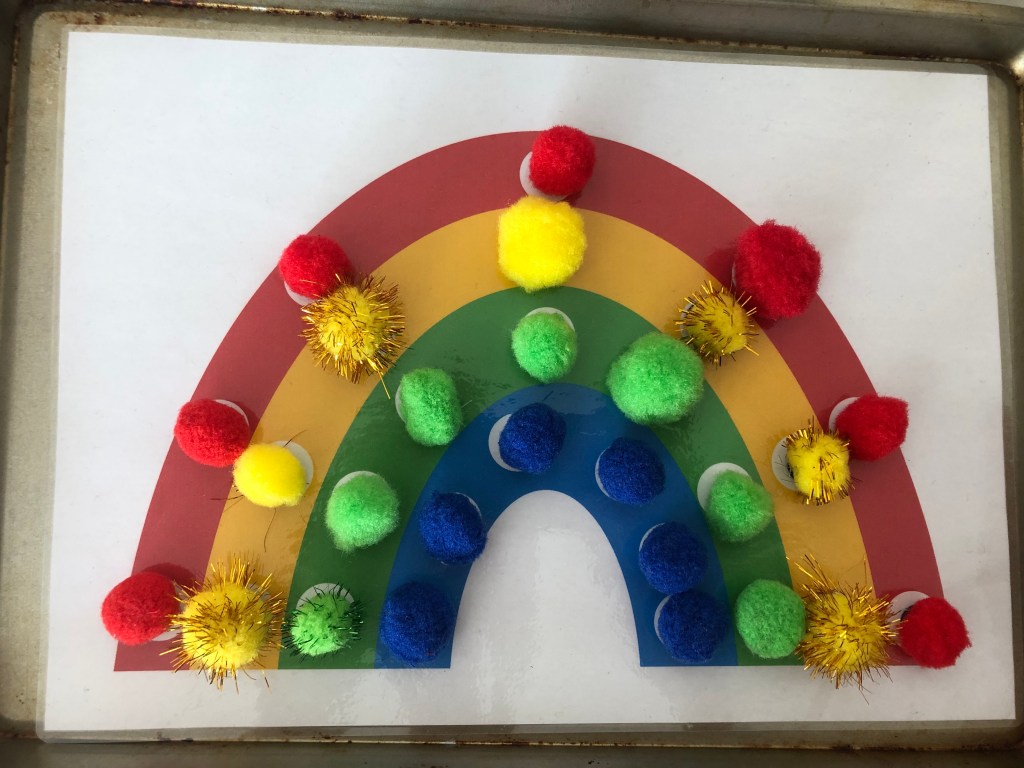
This needs some preparation, but it is colourful and fun! (Maybe best for slightly older children because of the use of magnets) Each pom pom has a magnet glued onto the bottom. The rainbow sheet which has been laminated is sitting on a metal baking sheet. Every time your child does some brilliant behaviour even if it was they said please or thank you. Put a pom pom on the rainbow. Can they fill the rainbow by the end of the day. You can download the rainbow print out below.

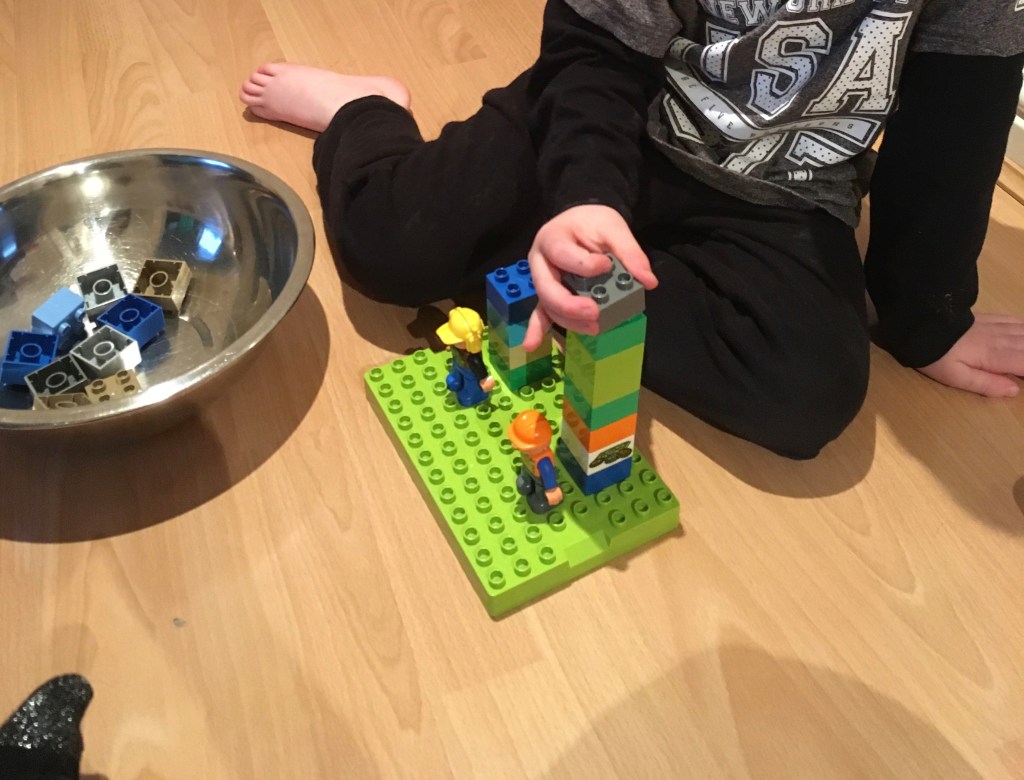
If your child is into lego or Duplo then use the Lego to make a tower. How big can the tower get? Fill a bowl with bricks every morning and see if you can use them all.

The important thing with this technique is not to take away. So if they show some not great behaviour then deal with that separately. This is all about rewards and praise.

Brain Breaks
Before entering into homework time or something that is going to require sitting still or focus. We have often gone on a run or walk first or before needing to sit still for a while we have been to the skatepark or the park first to burn off some of that excess energy. But particularly before homework time we go out for a walk. You can use this time to talk about the expectations you have for the homework time coming up, what you will do and how long it will take. But mainly this time is for letting off some steam before sitting down. It doesn’t always work, but I have noticed a difference when we have done it and when we haven’t. Or say you’ve gone to a wedding or round someone house, which isn’t completely set up for an active bean, then regularly go for a little walk outside. This will do you both the world of good and it takes the pressure off your child. We recently went to the theatre, it was an hour long show and instead of me expecting him to sit through it for the whole hour I set in my mind that at the half way point we would talk a short walk. The walk was 1 min, but that change of scenery and getting up completely settled him and he was able to enjoy the rest of the time.

Activity and Challenge
I also find that sometimes the best focus comes whilst he’s concentrating on something else at the same time. No I am not meaning watching a screen whilst testing timetables. But maybe jumping on the trampoline whilst shouting out the 3 timetables or during lockdown we took to reading a book whilst jumping.

I watched a programme once where a child played table tennis whilst revising for a history test. It may seem counterproductive to get them to do other stuff, but I think it takes the pressure off. It’s the same principle as using a fidget toy, but a whole body work out.

Where this type of thing isn’t possible, then fidget toys are brilliant. You can readily get hold of fidget toys on the high street now. Another great thing (again for older kids) is letting them have blu tac or play dough to play with whilst working or kinetic sand. Just gives them that outlet.

I guess what I am mainly trying to say is that in some ways it is better to embrace their ADHD characteristics instead of always fighting against them. There are times in life where you have to fight against them. But there are also times where you can work with them and it’s finding that balance.

Challenging Behaviour

I’ve definitely been in a place (still am sometimes) where my child’s behaviour is so overwhelmingly awful. In those times you feel like you have two options:
1. Let the wave of despair overtake you and give up
2. You decide to give yourself a good talking to and say enough is enough.

So please hear me when I say I know it can be difficult and I know for some of you it is just difficult almost all of the time. For those facing that I applaud you and think you are particularly amazing. But I do believe, even if you child has additional needs or not, that it is possible to work on at least some of the behaviours and put in strategies that can support you and give structure and routine to your child.

There are some key things to remember when thinking about behaviour:

1. The behaviour is always telling you something
– Has the behaviour got worse in the last few days? Are they coming down with something?

– Does your child struggle to communicate? Is the challenging behaviour a way of expressing frustration?

– Have things changed at school or at home?

– Are they needing a bit more attention?

To name but a few of the reasons. But maybe if you can take a step back from the situations you may find that there is a reason for the behaviour.

2. You can’t combat all issues at the same time, you and your child will get overwhelmed.
For example, my little one when a lot younger would not walk up the stairs to our 2nd floor flat. He could walk up the stairs, he just wouldn’t. He would lay on the stairs or scream or generally send me over the edge especially when you had loads of bags and no lift! At the same time meal times were horrible – getting up or throwing food. To make matters worse bedtimes were also very difficult, and the list could go on! But instead of tackling all the issues at the same time, I had to decide which was the more problematic and then focussed on that one.

If you focus on one issue you can give your attention to that issue, also you can gain confidence as things change and also it can give you hope that success if possible.

3. Turn round the negative into a positive
It’s so easy when you are tired and possibly despairing to only look at the negative behaviour. Don’t worry we all do it!
If you can use strategies that encourage you to look for the positive behaviour, your child will pick up on this. Strategies such as:

– Every-time they do good listening – put a marble in a jar, can the jar get full by the end of the day.

– Put a Lego brick on a the tower every time they are kind – how tall will the tower get by the end of the day.

– Reward charts for eating their meal well.

By turning round the negative behaviour and looking for the positive both you and your child can start to form new habits, you can start to see that your child can do good listening even if at the moment it is only half the time. Children with ADHD particularly respond to praise and rewards so all of these strategies would be great if you child has ADHD or ADD.

Below is a reward chart you can download. Write in the top box, what you want to achieve and in the bottom box write the prize they will get when they have 8 stickers (don’t go large with your prizes – this won’t be the last reward chart you will do.)

4. Model it
I remember once shouting to my child ‘stop shouting at me’. And it made me realise that I shout a lot. I certainly won’t judge anyone who shouts and it’s not a habit I have been able to break 100% of the time. But if I want my little one to stop shouting at me, I need to stop shouting first. If you want your child to be brave about something, do you need to show them what it is to be brave? I mean not all challenging behaviour our children exhibit is stemming from what they see you do, I certainly didn’t go round biting people!! But there are somethings that we can model.

I know this post doesn’t necessarily solve specific issues, maybe that will come at a later date. But hopefully it will help you look differently at the challenging behaviour and give you the confidence to challenge the behaviour!