The Ride Access Pass explained…

We were recently able to apply for a Merlin Ride Access Pass. So I thought I would take the time to explain why we have it and why we are not just skipping the queue because we feel like it (yes that was shouted at me yesterday).

My little one is completely and utterly taken by Rollercoasters. He watches POV’s (point of views) on YouTube, can tell you any fact about them and how much air time you get on each one. So it stands to reason that a preferred day out for him is a day at Alton Towers.

But we have a slight problem, my little one has ADHD. So queuing is incredibly difficult. He can do it because at the end of it is something he is desperate to do. But it comes with issues – like the last two times I’ve queued with him I’ve ended up with injuries and bruises.

So why is this… When a person with ADHD has to queue it’s like an elastic band being twisted and twisted until it’s very tight and at some point that elastic band has to spring back into its original position. This twisting can be a combination of anxiety, excitement and inability to be patient. This then can result in acting impulsively – swinging on the bars of the queue, running away or making incredibly loud noises.

The sensory issues surrounding queuing can also be daunting.

Smells such as food, other peoples washing powder or perfume can be overwhelming.

Loud noises such as others laughing or screeching or the music from the rides itself can cause anxiety or over stimulation.

Standing still for children/adults who are sensory seekers it is agonising as they are all the time trying to meet their sensory needs and therefor standing still doesn’t meet that. So to meet these needs they fidget, move around, jump, touch everything and generally be distracting to everyone around them.

For children and Adults who are sensory avoiders, queues can also be incredibly difficult. Again smells, loud noises and having people near by can cause anxiety and overwhelm. Making the whole process so unenjoyable and therefor they can’t enjoy the experience of coming to the theme park.

If by any chance they do manage to hold it together and queue especially for something like the cinema or the London eye (recent experience), then you find that they can’t actually enjoy the thing they have queued up for because all of their energy has gone into queuing and they can’t hold it together any more. One experience we had, was for a ride and he held it together to queue and do the ride, but it was all too much so came off and was aggressive and shouting. Not fun for us and not fun for him.

For me as the parent, I find queues difficult because I have no idea what will happen or what he will do to meet his needs. And usually it’s me who gets the impact of it. I end up like an elastic band of stress, it gradually getting worse the longer we queue.

Merlin have a great system, so where people may feel we are skipping the queue, we are not I assure you. We queue by walking around the park or playing on the play parks and when it is time for us to ride we make our way to the ride. We can’t go on other rides during that time and we queue for the same amount of time that is stated outside the ride. So we are really not skipping the queue I promise, we are just queueing in a way that means myself and my little one are not hurt in the process of queueing!

ADHD and Covid

I know I am a bit late to the party, but I didn’t confidently feel I could write about this until really having to deal with it.

Covid has rocked all of our worlds in one way or another. For some it’s been the push they need to make big decisions and for some its completely put a stop to things.

For us covid has had a number of impacts some not great and some great! When it all first happened, we realised that our support networks for our active bean (my son) were things like swimming, gymnastics, the indoor skate park, the trampoline park. These were the things we used to survive on a daily basis. And these were all taken away as soon as Covid arrived. This was a disaster for us. Plus we lived in a second floor flat, so getting outside and getting exercise or at least the amount of exercise needed was tricky. So for a while it was bad! What was good is we were able to ask for help from the school and it finally gave us the push we needed to move to a house with a garden and a trampoline. Which has made a significant difference.

We’ve been able to get back some normality as the time has gone on, we’ve gone back to the trampoline parks and the skate parks and weekly gymnastics.

But then my active bean got covid recently and had to self isolate for 10 days. All my fears were realised, I have dreaded being in for that amount of time. We’ve never done it. But although it wasn’t as bad as I thought, it did get me thinking. Especially as when track and trace call and ask if you need any support and the women got a diatribe about how we need to do more about support adults and children with ADHD whilst self isolating (I’m not sure she knew what to make of it).

I then read a research article about covid and ADHD (I’m so sorry but I can’t find it again) but the conclusion was this…

So what are some of the challenges? and what can be done?

1. No exercise – during lockdown at least we could get out for at least an hour a day (no way near enough, but it was something). But when self isolating there was no way we could leave the house. Annoyingly it also rained a lot so the garden was off limits too.
Answer One day we did a lot of running on the spot, another day we joined in a session of Apple fitness. Another day he just slid down the stairs a lot!

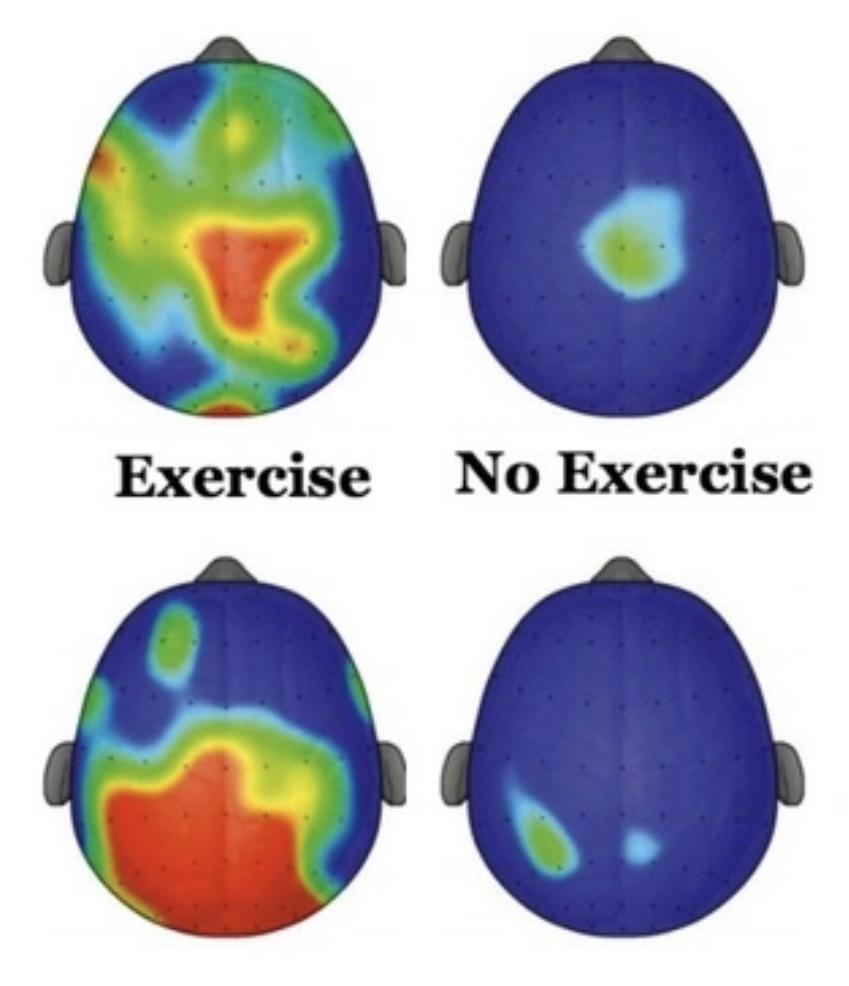
Another research article I read supports the absolute need for physical activity. They scanned peoples brains who have ADHD and after physical activity they were able to have the greatest amount of executive control.

The red represents the greatest amount of executive control and blue represents the lowest.

We find this so much in our every day life, after school we have to go out on some massive run or climb or something to allow him to unwind and then the evening is better. So if in self isolation make time for physical activity. Carve out the time, if you have a child with ADHD find a fun way to make room for at least 10 mins of physical activity, life will feel a bit better.

2. No structure – There was no structure for us, it was the Christmas holiday, so we didn’t have to do home learning. We also obviously couldn’t see family or do all the things we’d planned so that was difficult. It was our decision that we wouldn’t have restrictions on screen time, but we did try to plan in at least one activity a day. I must confess that this was tricky, but we did manage it. We used the joy of amazon to buy in new activities such as Polymer clay or games, and we enjoyed a lot of cake and watched films together.

3. Cabin Fever – This did get to us, especially my little one. By 5pm most days he would be having a melt down. So we began to plan things in for around this time. Fire pits (If it wasn’t raining) or a nice dinner. But mostly we were just with him in the melt down.

The reality is self isolating with someone with ADHD is tricky, self isolating with someone without ADHD is tricky.

Some things I wish I had done.
1. Forced garden time each day – this may have helped getting some fresh air.

2. Not done the day 6 & 7 test – he was so upset and disappointed when we tested on day 6 & 7 and found he was still positive. So in a way I wish I would have just stuck it out.

3. Transitioned for day 10 – He was really anxious about leaving the house when he actually could. I wish I had done a picture timetable to help that transition.

4. Support sensory needs – In some way I think I should have created a calm down sensory space.

But hopefully my wish list might give you ideas if you ate in the same situation.

Relax with Play Dough

Every child loves play dough and it is a fantastic sensory experience. They can prod away or make sculptures. When working in school, play dough was great for supporting fine motor skills and if you want your child to stay engaged in with Maths just add play dough – so a small pot was always in bag.

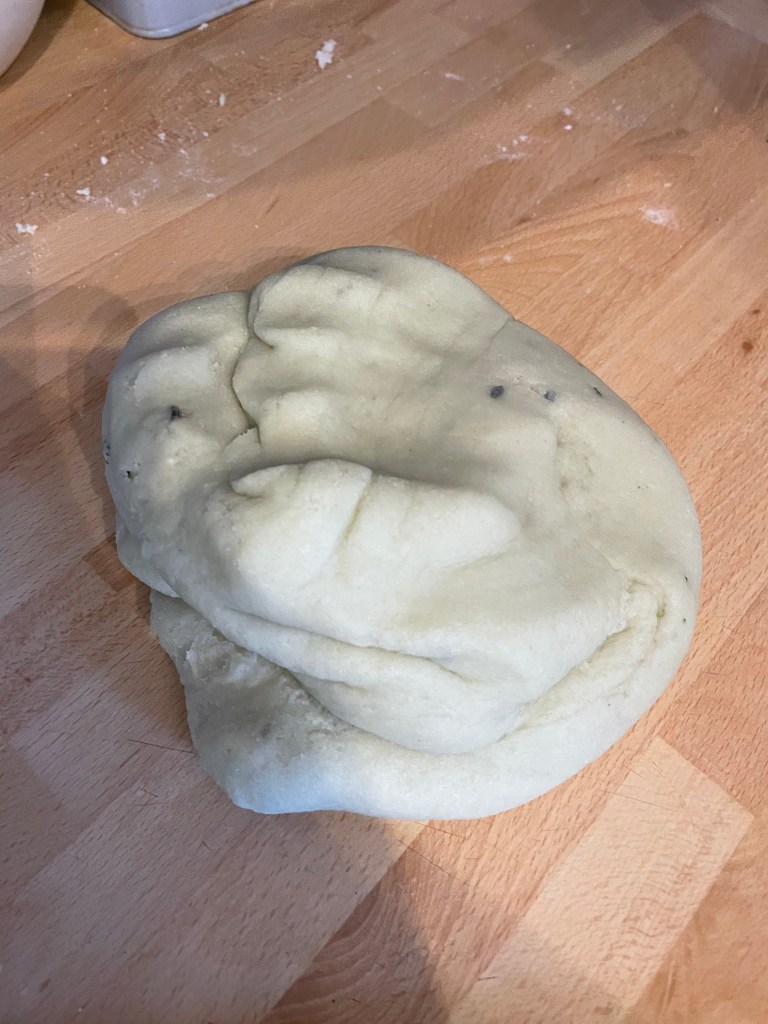
This Play Dough has an added sensory twist with dried lavender and also I have added lavender essence.

Lavender cut from the garden, hang upside down for. a few weeks to dry then add to your Play Dough.

So if you are stuck for something to do or just need a calm down activity, have a go at making Play Dough. You don’t need to add the lavender so don’t let that put you off making it.

The Recipe…
This Play Dough is also completely edible (admittedly you wouldn’t want your child consuming this much salt – but I don’t think it would get that far). 

The recipe is…

1 Cup of free running salt

2 Cups of plain flour

1 tablespoon of vegetable oil

2 Cups of boiling water (straight from kettle). 

Edible glitter, dried lavender or dried herbs – optional

Food Colouring – optional

Cream of tartar – again optional but it helps it last longer. 

It’s so easy to make:

Simply mix everything together

When all ingredients are mixed and it looks doughy pour out onto your floured worktop and knead until a good consistency.
(I have added green food colouring, but I am not sure you can tell!)

You also don’t need lots of fancy equipment to play with it either. If you can add a rolling pin, a spoon and some pots and let their imagination take over.