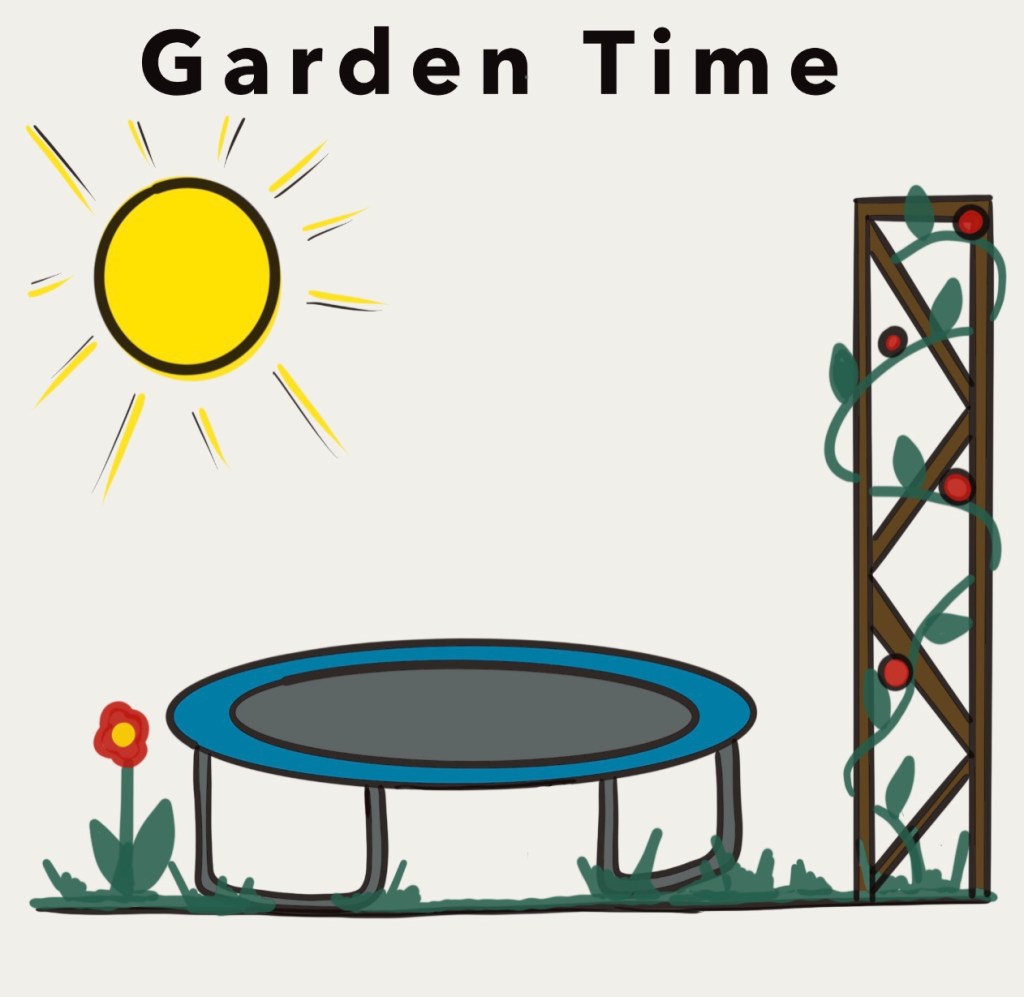
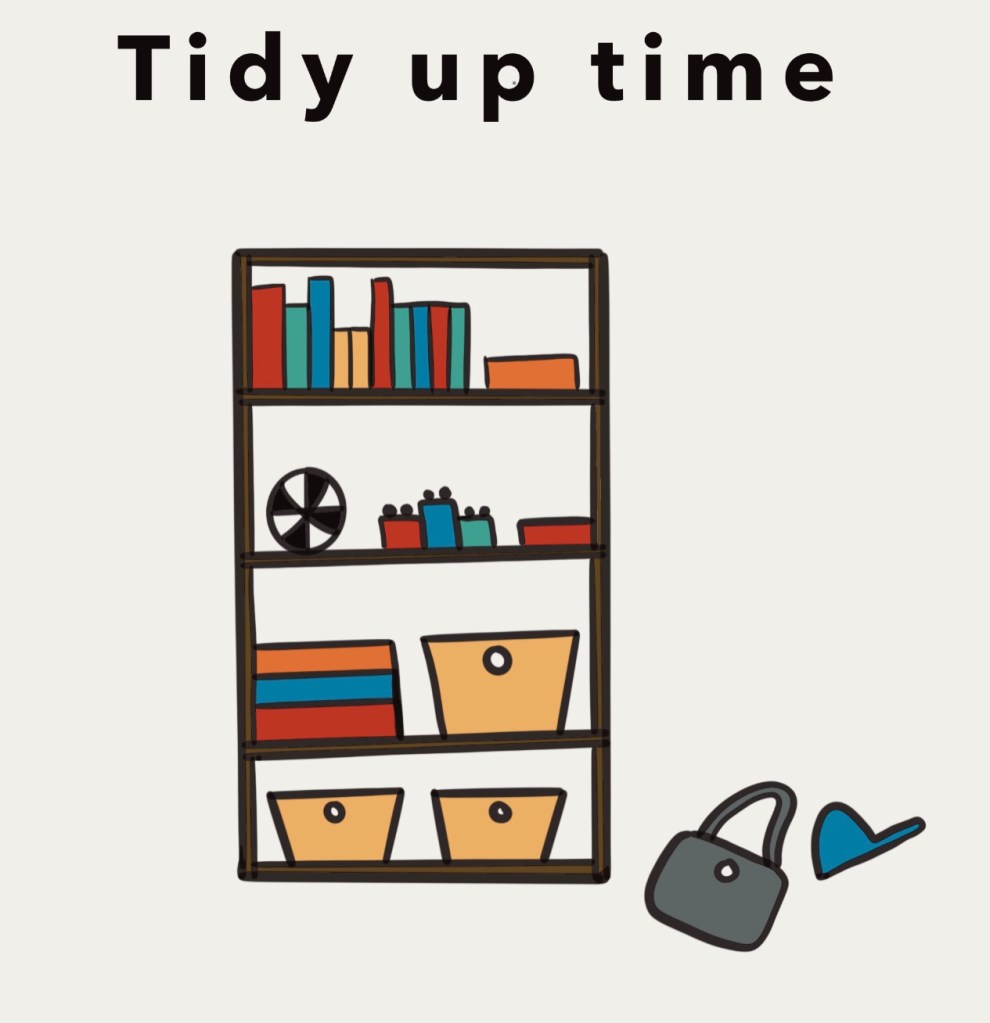
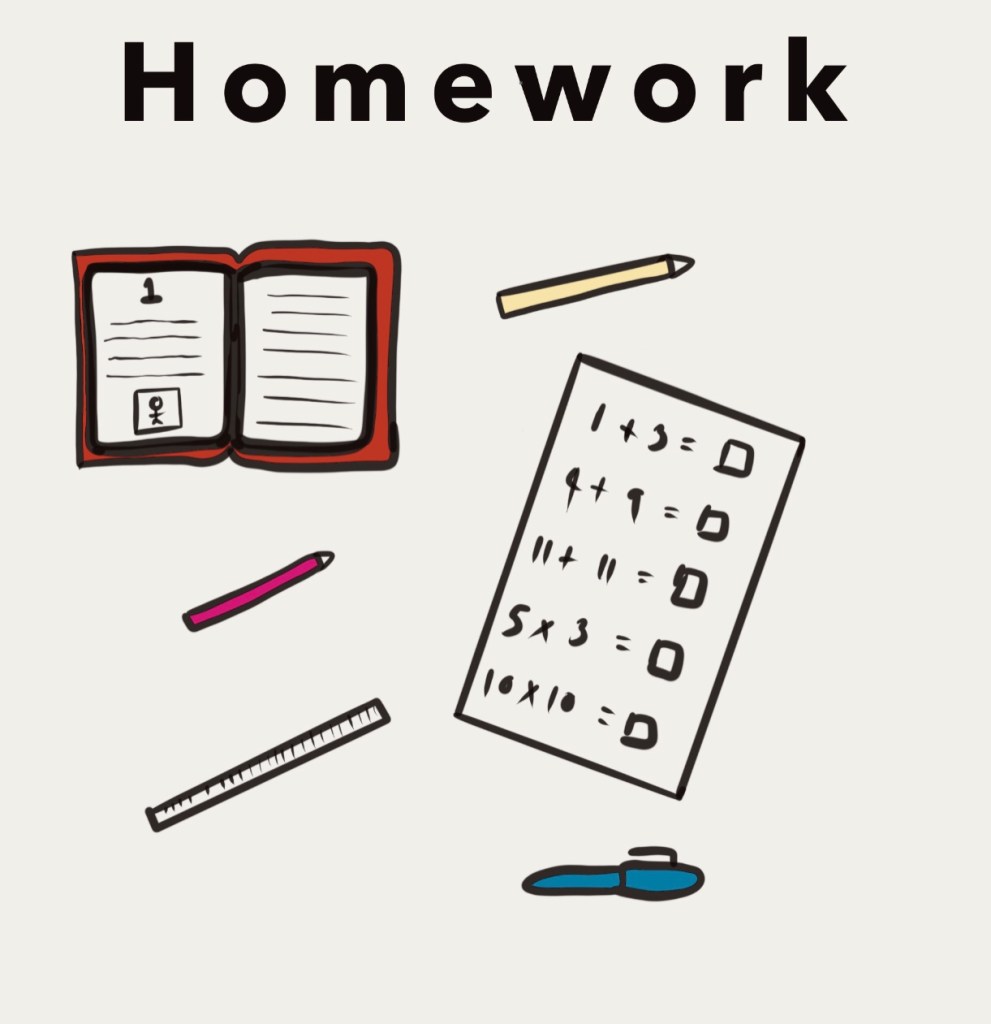
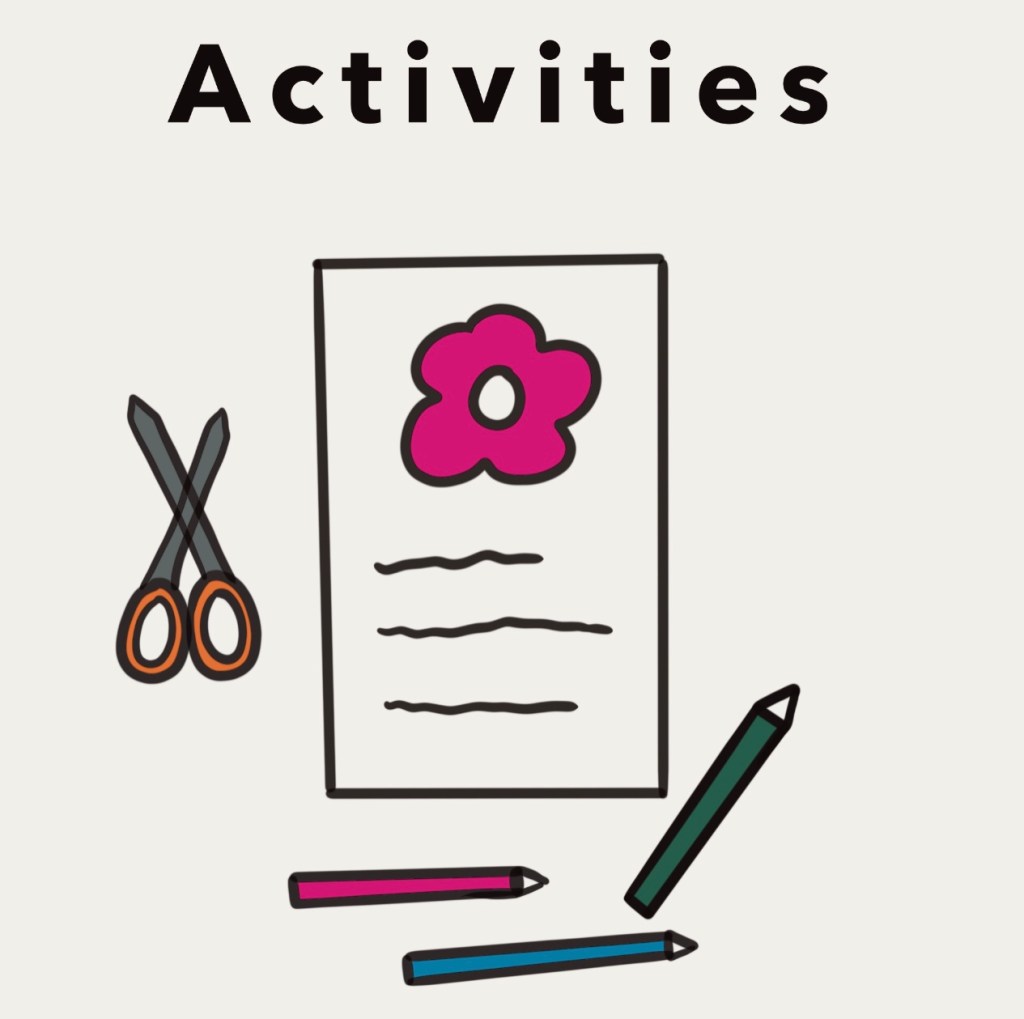
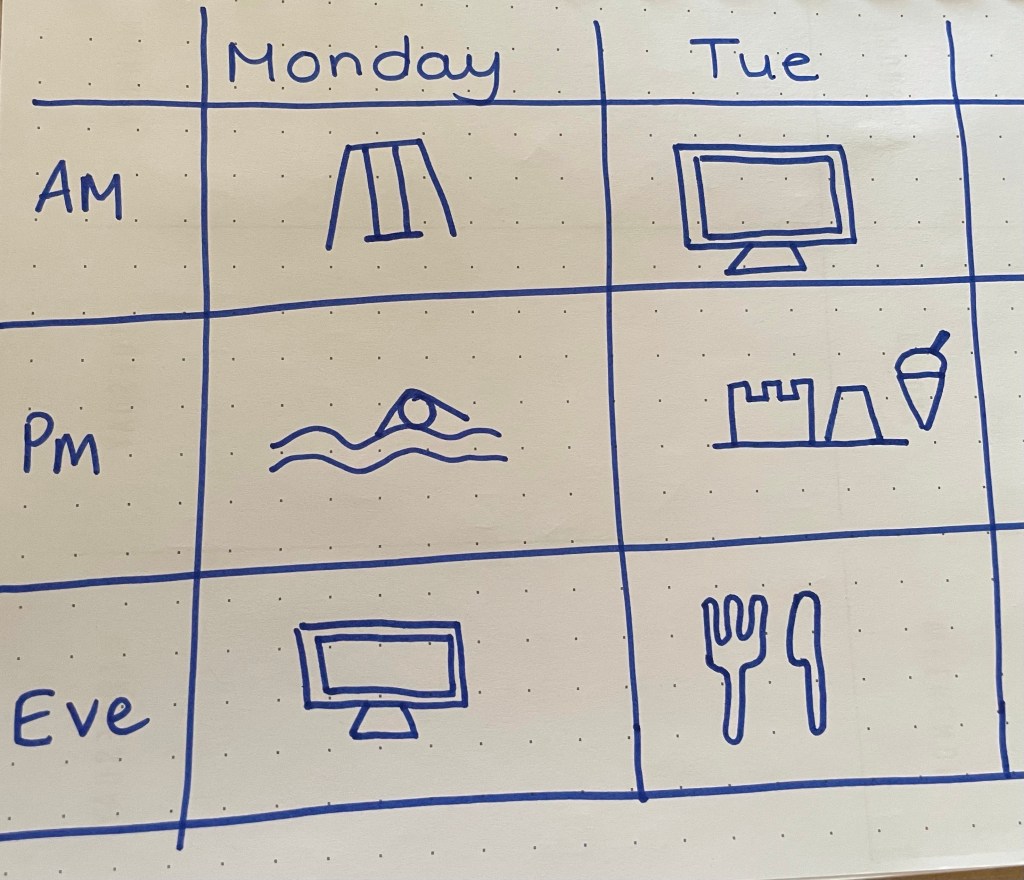
I’ve been spending some time updating my now and next cards. They are all hand drawn and can also be made into a picture time table.
If you would like us to make a now and next board for you or a picture timetable click here for prices. We can make up pictures that suit your routine also.
The holidays are I imagine a period of missed emotions. It’s wonderful that you can spend all this time with your children and do all the fun things you can’t do during term time. But at the same time there might be an element of dread or worry that things are going to more difficult than normal (and normal is generally difficult).
If you are feeling all those different feelings then imagine what your little one might be feeling: – change in normal routine – Different structure to the day – More tired because of late nights – Anxiety due to travelling and staying in different places – Being unsettled because they don’t have their normal stuff around them.
I often find that the main frustrations come from my little one not knowing what is happening each day. With school they know what is happening each moment of the day, with some changes, but they know what is happening and how long roughly each thing is going to last. Then the holidays happen and all of a sudden there is anxiety about how each moment will be filled.
So to combat this we make a plan for everyday and write it out so it is accessible and seen by all. Even if your plan is to have a lazy day – write it down. Our days definitely go better when everyone knows the plan.
Your timetables can be as simple as write out or draw a picture for what is happening in the morning, afternoon and evening or you can go into more detail.
You can either just put one day up at a time using a white board or you can present the whole week. It just depends on what is best for your child. Also don’t be worried if the plan changes just simply cross it out, explain the change and rewrite the new plan on your chart.
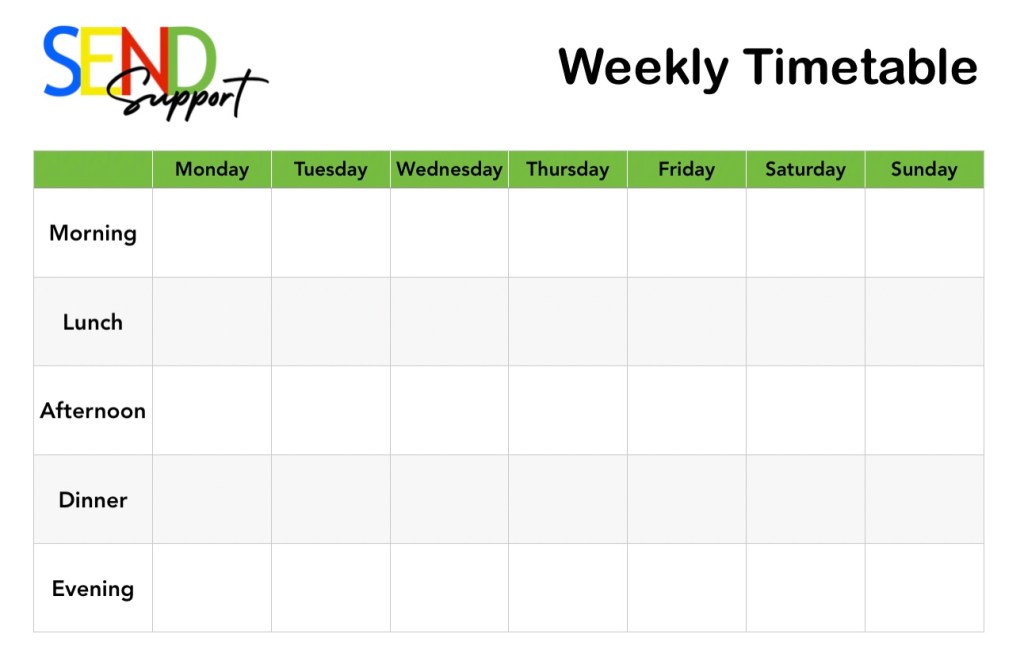
I have made a weekly timetable chart, which you can download above and print out. Print out as many as you need for your holiday or if you have multiple children doing different things and hopefully it will slightly help towards having a smooth holiday.
Using a picture timetable is another strategy you can have in your tool belt that may help those tricky times of day!
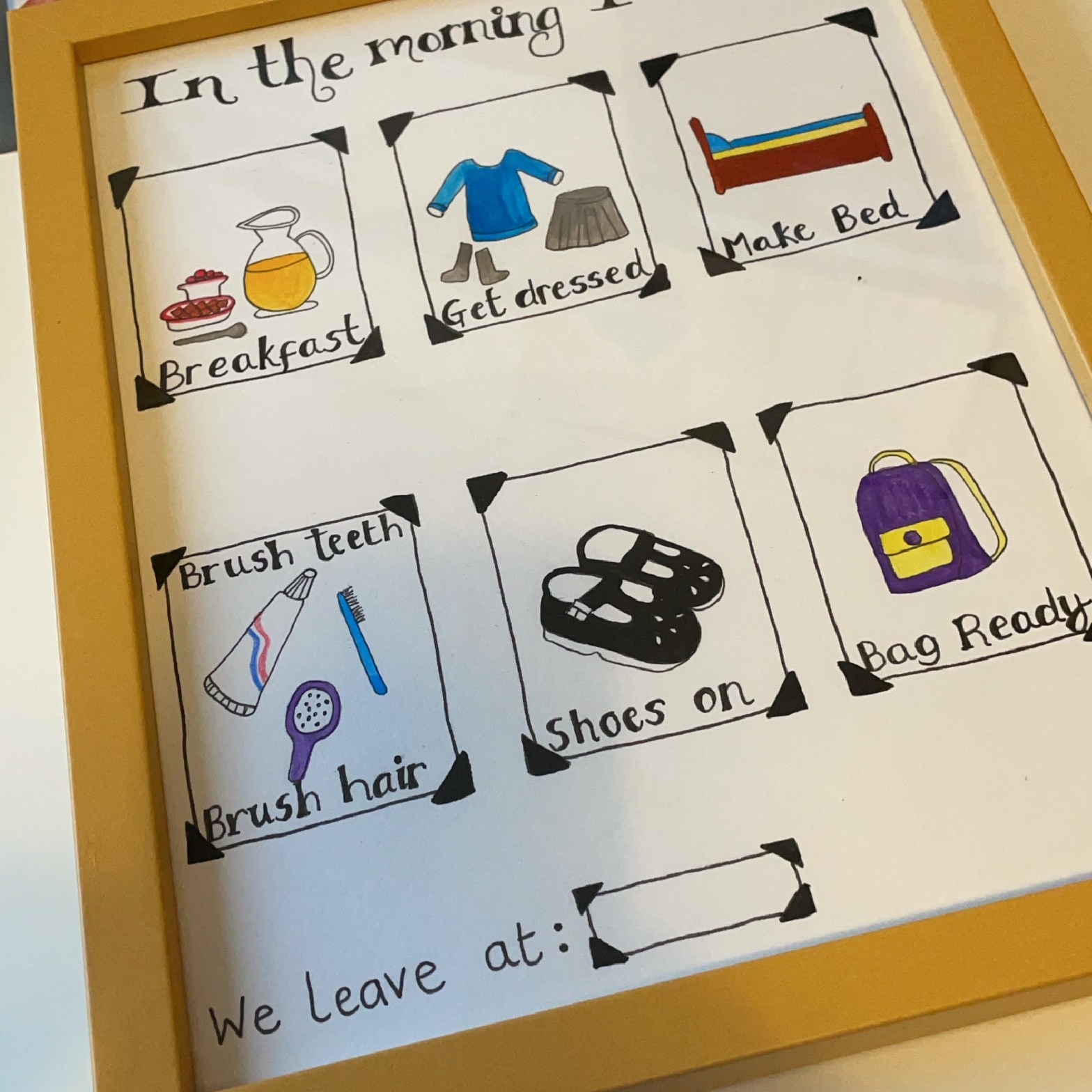
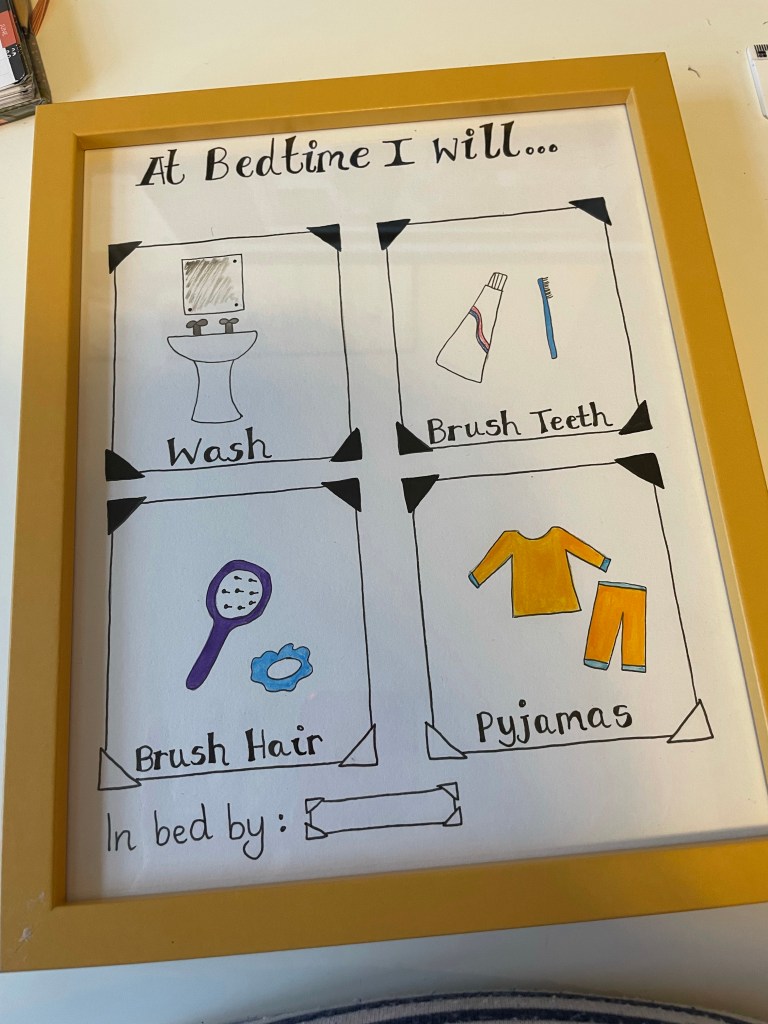
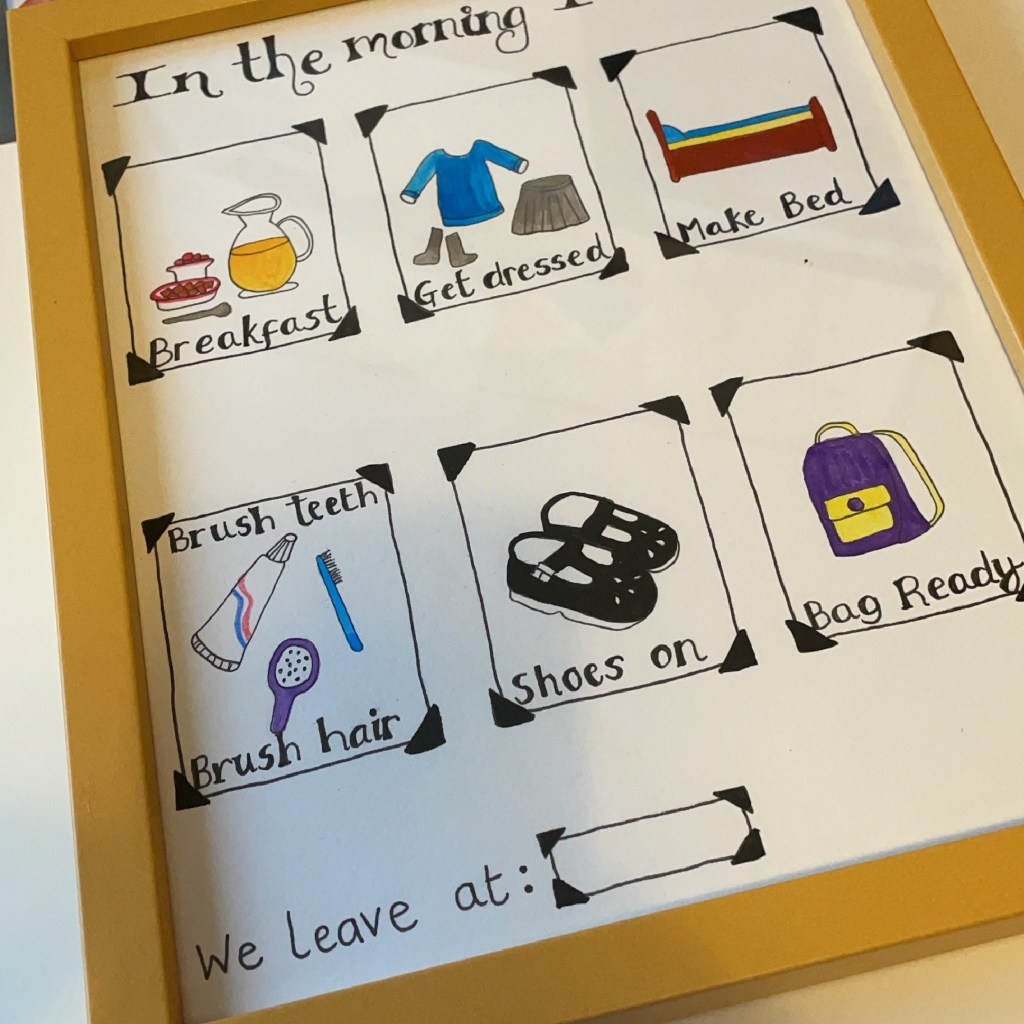
Very similar to a now and next board. But this time all the activities are all there in front of them and you tick them off as the activity is completed. They are really helpful for times like getting ready in the morning or getting ready for bed.
What is great about these frames is they become the authority; it’s not you nagging, its the frame telling them what to do.
So how do you use them? First break down the main activity into smaller tasks. E.g. Getting dressed is the main activity – break that down into small jobs, such as put on trousers, put on socks etc. You can either take photos or draw the items. Then put it in a picture frame. Make sure you put the frame in a prominent position, somewhere it will be seen and somewhere your child can reach it. When you are doing those tasks – go to the frame and see what the first job is. Do the job and then using a white board pen tick it off. Then look what the next job is and so on.
If you don’t feel confident in your drawing skills send me a message with the activities you want and I can make one for you for £10 or £15 for two.
My little one is a bit older, but I can now say – “go and look at the jobs on your frame” and mostly mornings are a million times better. But we have used the frame now for quite a few years.
The other great benefit of putting it in a frame is that you can wipe off the ticks and it’s ready for using again the next day. See if it works for you.
I’ve definitely been in a place (still am sometimes) where my child’s behaviour is so overwhelmingly awful. In those times you feel like you have two options: 1. Let the wave of despair overtake you and give up 2. You decide to give yourself a good talking to and say enough is enough.
So please hear me when I say I know it can be difficult and I know for some of you it is just difficult almost all of the time. For those facing that I applaud you and think you are particularly amazing. But I do believe, even if you child has additional needs or not, that it is possible to work on at least some of the behaviours and put in strategies that can support you and give structure and routine to your child.
There are some key things to remember when thinking about behaviour:
1. The behaviour is always telling you something – Has the behaviour got worse in the last few days? Are they coming down with something?
– Does your child struggle to communicate? Is the challenging behaviour a way of expressing frustration?
– Have things changed at school or at home?
– Are they needing a bit more attention?
To name but a few of the reasons. But maybe if you can take a step back from the situations you may find that there is a reason for the behaviour.
2. You can’t combat all issues at the same time, you and your child will get overwhelmed. For example, my little one when a lot younger would not walk up the stairs to our 2nd floor flat. He could walk up the stairs, he just wouldn’t. He would lay on the stairs or scream or generally send me over the edge especially when you had loads of bags and no lift! At the same time meal times were horrible – getting up or throwing food. To make matters worse bedtimes were also very difficult, and the list could go on! But instead of tackling all the issues at the same time, I had to decide which was the more problematic and then focussed on that one.
If you focus on one issue you can give your attention to that issue, also you can gain confidence as things change and also it can give you hope that success if possible.
3. Turn round the negative into a positive It’s so easy when you are tired and possibly despairing to only look at the negative behaviour. Don’t worry we all do it! If you can use strategies that encourage you to look for the positive behaviour, your child will pick up on this. Strategies such as:
– Every-time they do good listening – put a marble in a jar, can the jar get full by the end of the day.
– Put a Lego brick on a the tower every time they are kind – how tall will the tower get by the end of the day.
– Reward charts for eating their meal well.
By turning round the negative behaviour and looking for the positive both you and your child can start to form new habits, you can start to see that your child can do good listening even if at the moment it is only half the time. Children with ADHD particularly respond to praise and rewards so all of these strategies would be great if you child has ADHD or ADD.
Below is a reward chart you can download. Write in the top box, what you want to achieve and in the bottom box write the prize they will get when they have 8 stickers (don’t go large with your prizes – this won’t be the last reward chart you will do.)
4. Model it I remember once shouting to my child ‘stop shouting at me’. And it made me realise that I shout a lot. I certainly won’t judge anyone who shouts and it’s not a habit I have been able to break 100% of the time. But if I want my little one to stop shouting at me, I need to stop shouting first. If you want your child to be brave about something, do you need to show them what it is to be brave? I mean not all challenging behaviour our children exhibit is stemming from what they see you do, I certainly didn’t go round biting people!! But there are somethings that we can model.
I know this post doesn’t necessarily solve specific issues, maybe that will come at a later date. But hopefully it will help you look differently at the challenging behaviour and give you the confidence to challenge the behaviour!
Social stories are a wonderful creation, which were the brainchild of Carol Grey in 1991.
Autism.org.uk describes social stories as “short descriptions of a particular situation, even or activity, which as specific information about what to expect in that situation and why.”
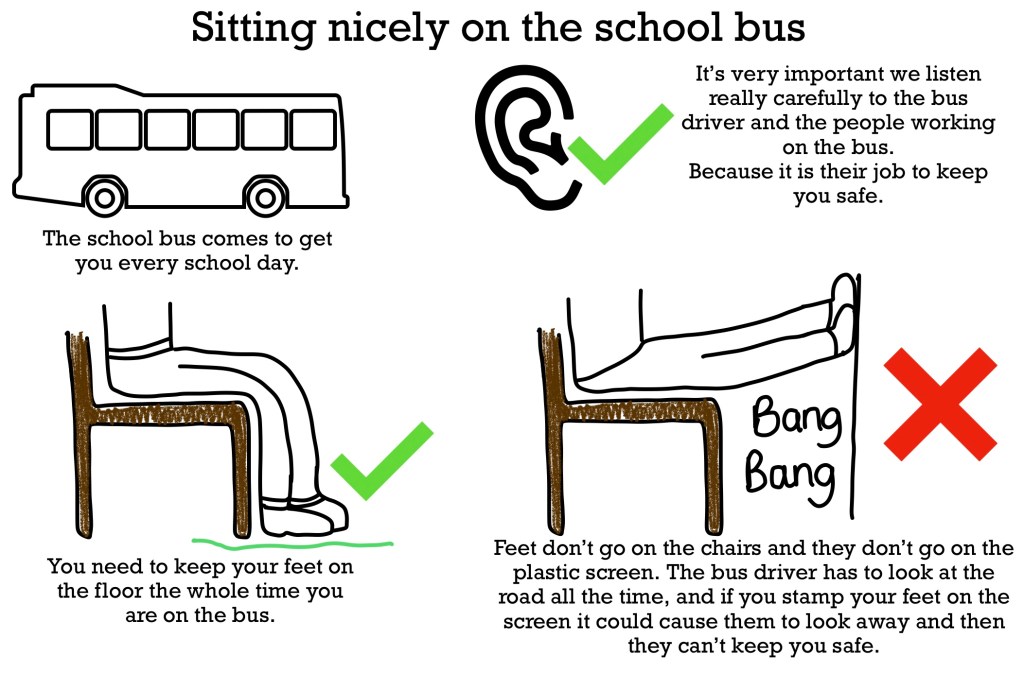
I have used social stories a lot in my work with children with SEND and I’ve also used them a lot at home with my own son. The name story might make it seem like they are long diatribe explaining a situation. But the key to them is that they are short, to the point and Visual.
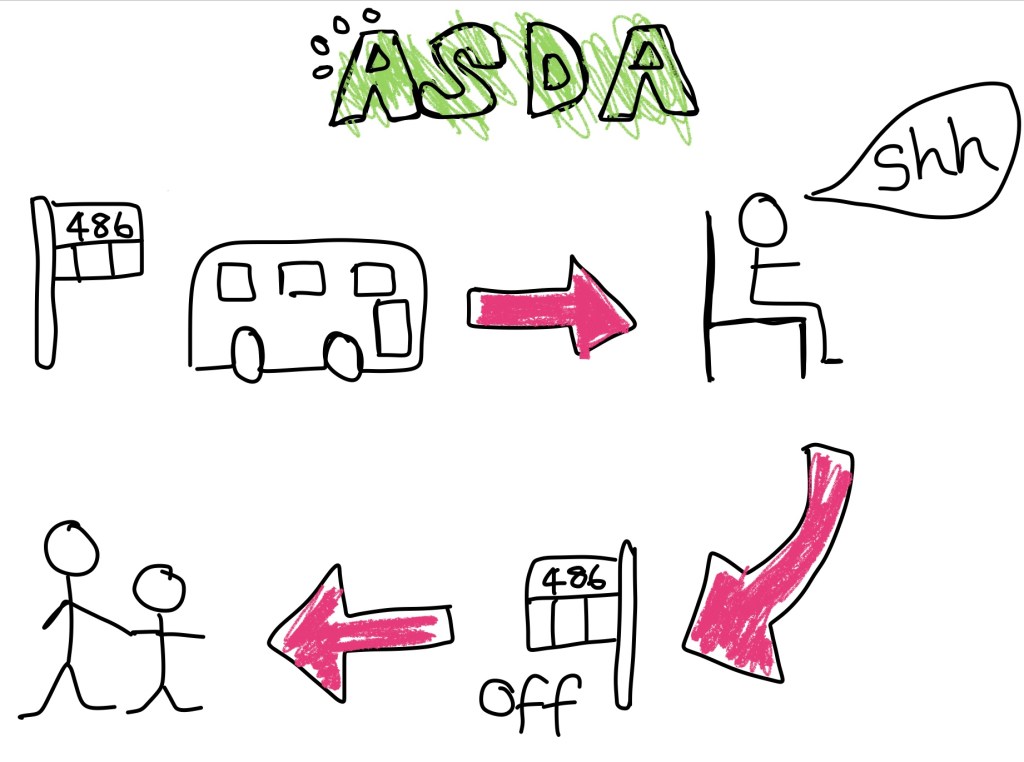
Sitting on the bus social story
They are used mainly with children with ASD, but I have used them with neuro-typical children too. They really come into their own to explain situations that cause the child difficulty or to help explain expectations of a situation coming up.
Situations could be: – Social situations – to help explain what is expected of our behaviour or how we should respond.
– Changes to routine – Something new is happening that doesn’t normally happen or the the routine is changing. Social stories can help.
– How to cope with different emotions – Some children find it very difficult to understand their emotions or know what to do when they feel like they do. Social stories can be used to explain what they can do when they feel angry or upset.
The stories themselves don’t have to be wonderful works of art. You can either use photos or draw the images you want in your story. The story below was written very quickly before a trip to the shops.
Trip to the shops
There arn’t even any words in this social story just pictures. And we talked it through before the trip and throughout the trip too. It explains what will happen and what the expectations of behaviour will be.
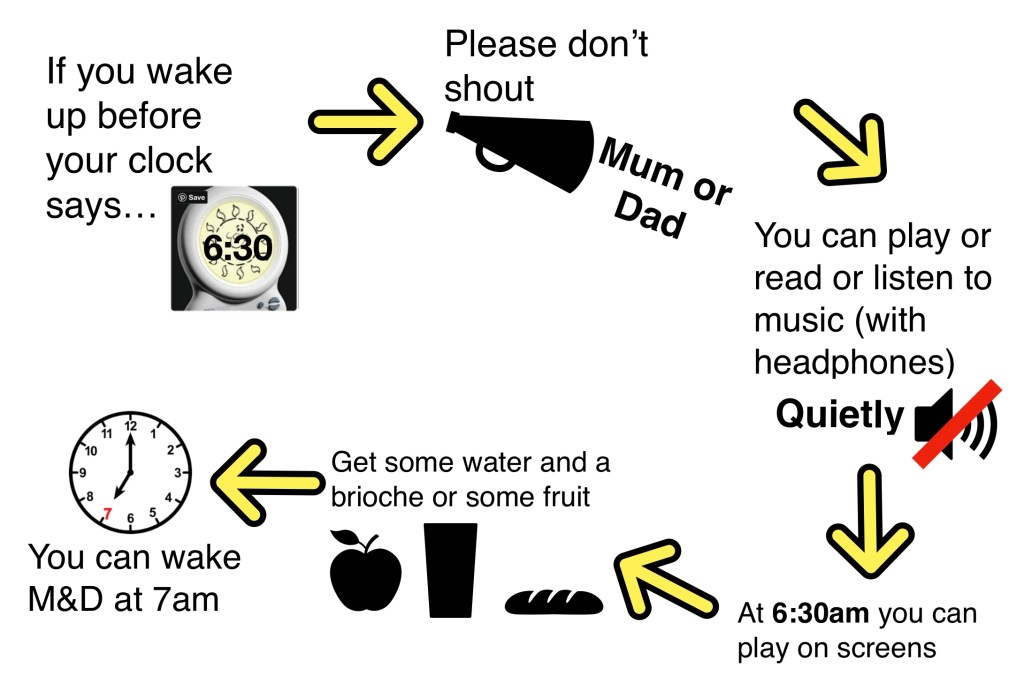
Waking up in the morning
The story above, was something I made as my son kept waking us up before 6.30am (he is a bit older). So I put this up next to his bed and talked it through the night before and he could read it when he woke up in the morning, or if he didn’t follow it we could go through it again with him.
The benefit of them being so visual is that the information seems to stick more. Having it down on paper means you can refer back to it regularly. You can also make smaller versions of them, laminate and keep with at all times if there is a more ongoing issue.
Please get in touch if there is a particular situation that you are struggling with at home or school and I can make a social story to help.
Have you ever been in that place, where your child has just not understood what is happening now and after. They get upset, you get upset (because normally it’s a time when you just need that thing to happen ) and then what should be an easy thing ends up being really tricky! Well it’s happened to me a lot!
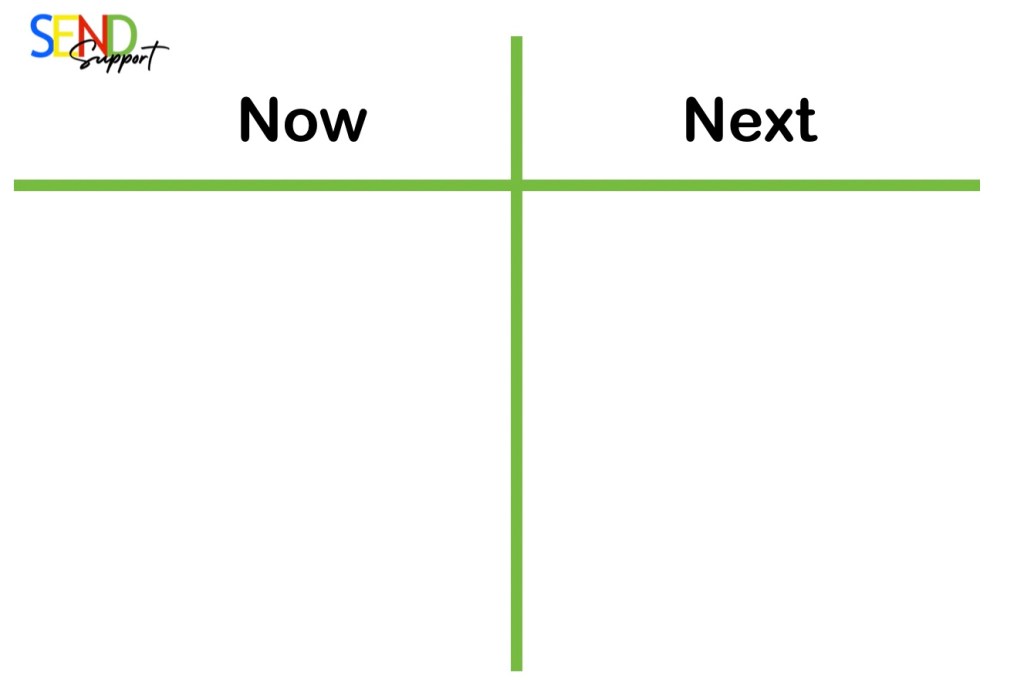
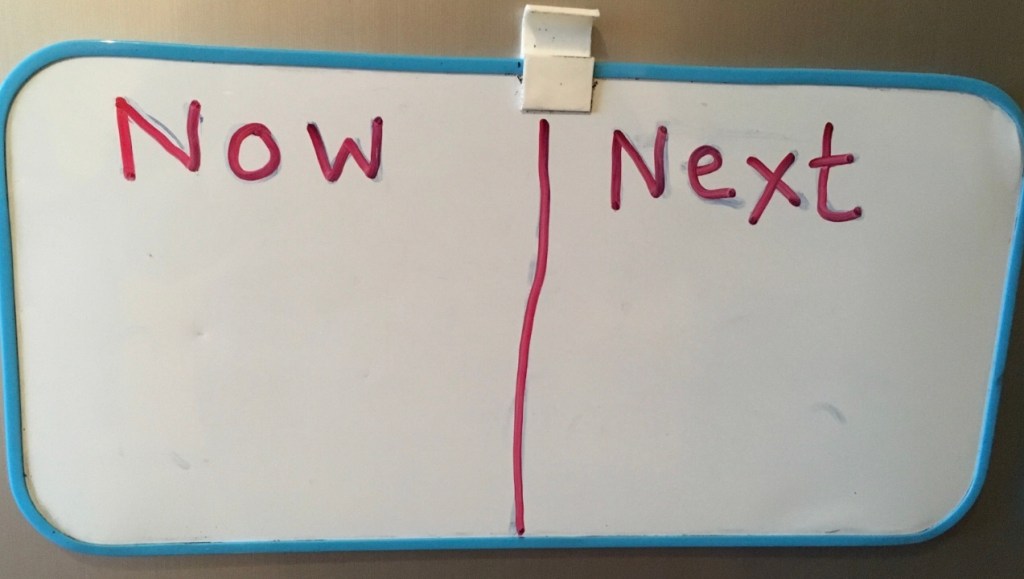
Here is where a now and next board comes into its own! Now and Next boards are great for all children. In it’s simplest form it tells your child what is going to happen now and what is going to happen next.
Now and Next board
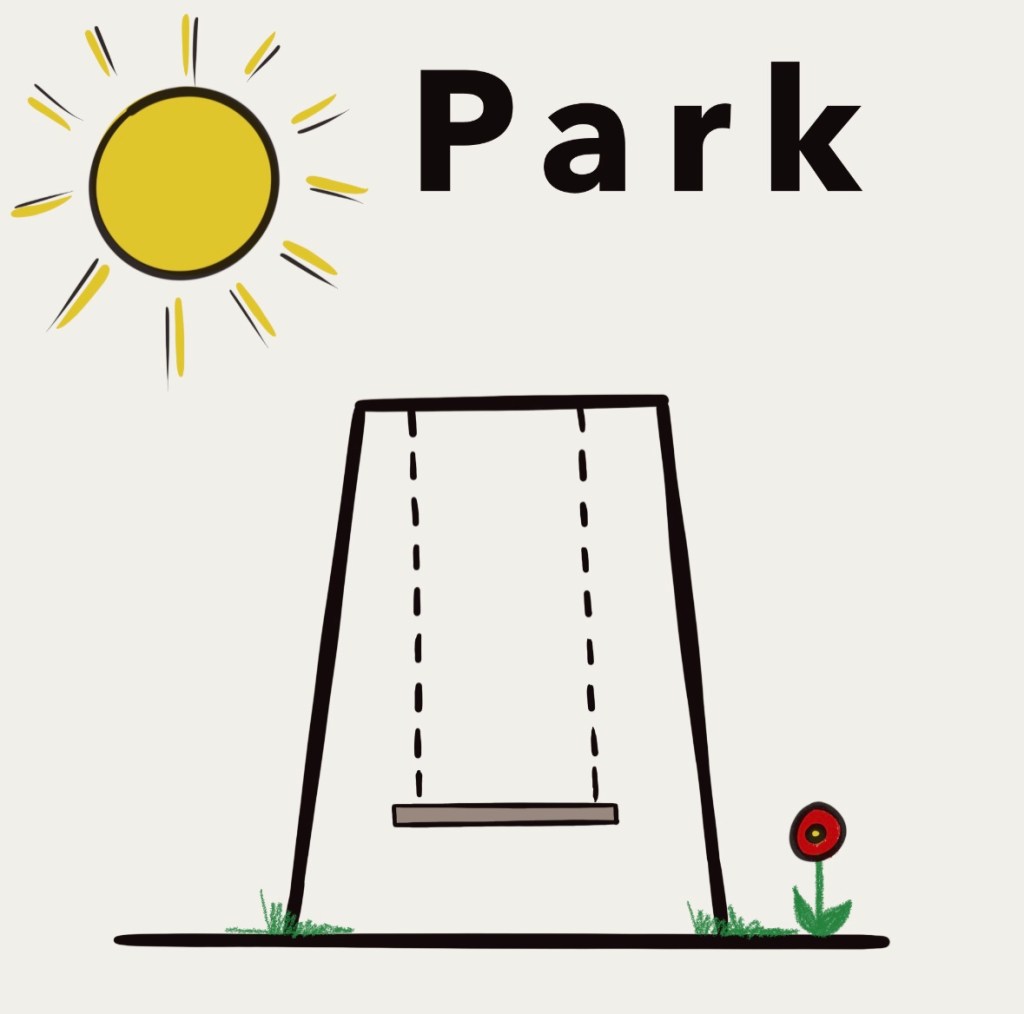
Now and Next boards are great for transitions that your child finds tricky, such as leaving the park. You would have a picture for leaving the park in now and in the next column a picture of say, lunch or seeing nanny! The child can then realise it’s not just about the fun we are having now, but what will be happening after, which children find very difficult to do as they are all about the NOW!
There are a number of ways you can use the board….
1. You can laminate it (always best anyway) and then draw on funny pictures to represent the activity in white board pens.
2. You could add Velcro to the board and have pictures ready made for each of the activities and then put on a new picture every time it needs changing.
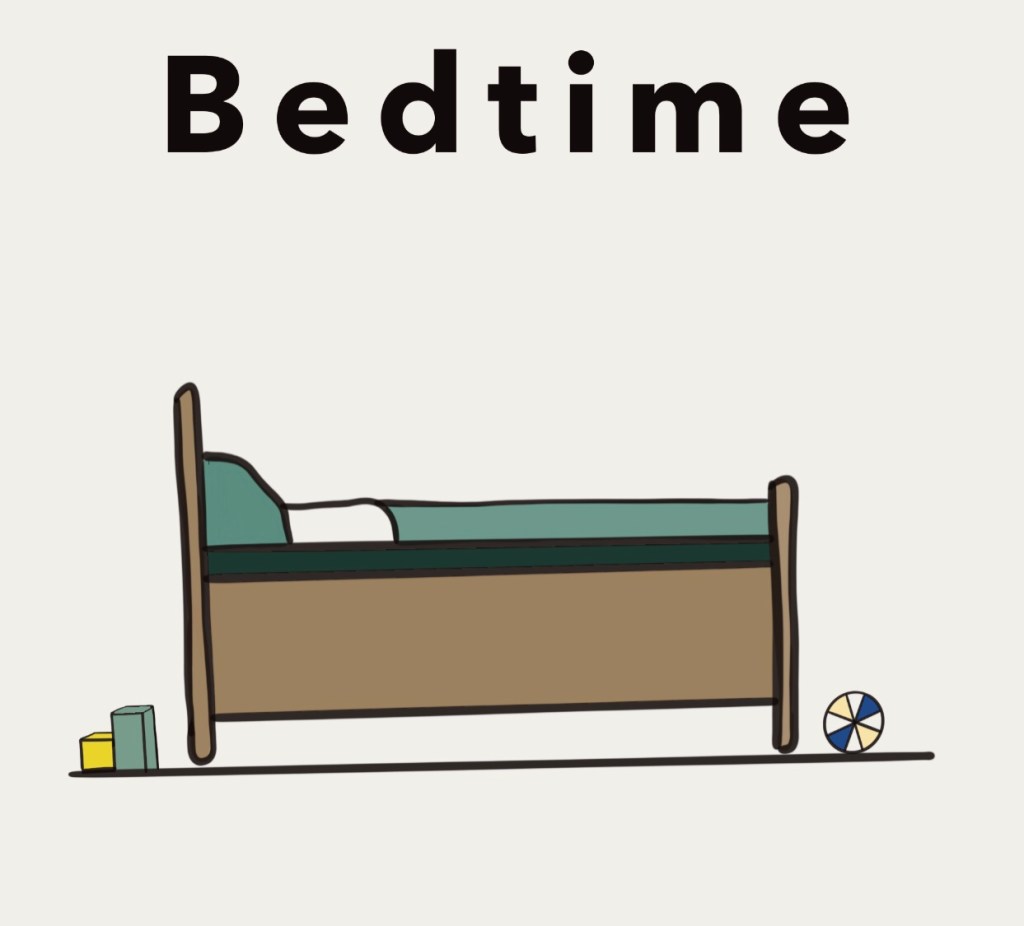
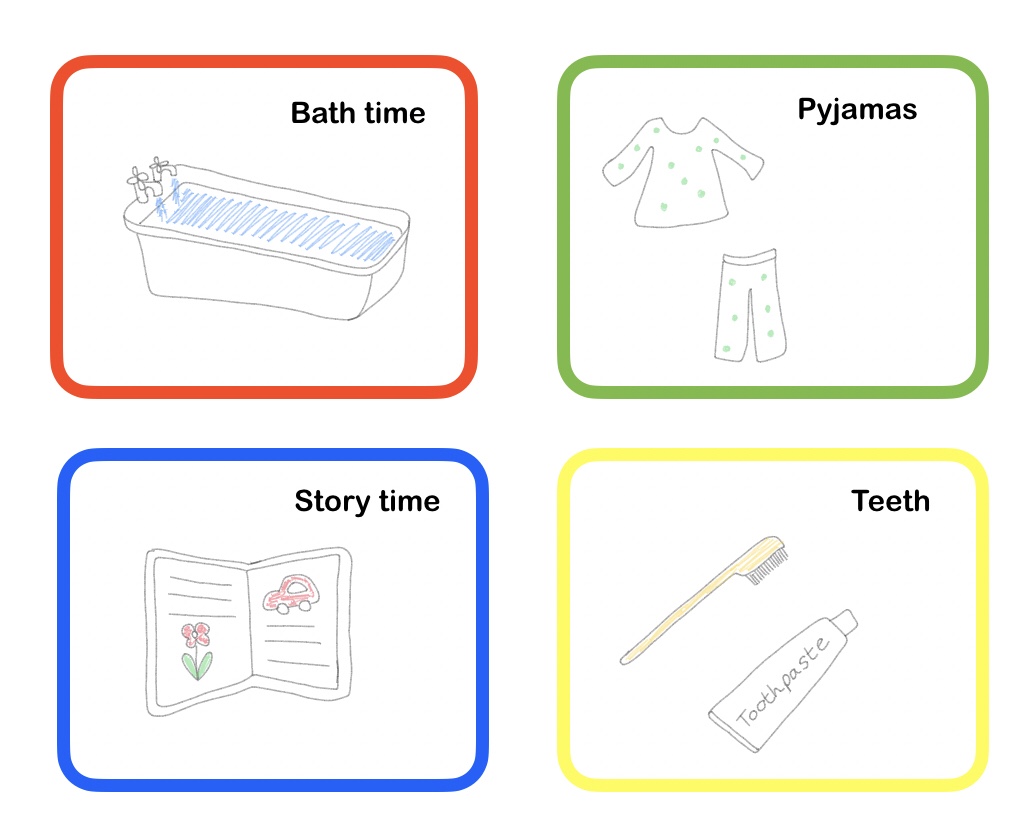
Bedtime routine pictures
3. Or if your child can read, then just use a white board and write on what is happening now and next.
I have included for you as a FREE download a Now and Next Board with cards for the bedtime routine. – Print off – Cut out the cards – Laminate (Optional) – Either use Velcro or blue tac to stick on
If you don’t have a printer or would just like me to do the hard work for you, message me and I will make up the bedtime kit for you £5 or if you would like different cards give me shout either through Facebook or by Email.






 SEND Support